

Patron Saint of Losing
Moral scrupulosity is a subset of OCD-symptomage that concerns obsessive thoughts and spirals about being ethically and morally despicable. It’s not surprising that this is very common among religious people, and is almost nearly the life force of the Evangelical Protestant dogma—that you, yes you, are evil, selfish, and undeserving of any kind of love or mercy, and if you don’t follow this very specific self-contradicting set of Pharisaic rules, it's over for you. To hell you go, to freeze for eternity with Cain and Judas and Pontious Pilate.
I’ve had problems with moral scrupulosity for most of my life. More present, logically, when I was younger and ascribed more fully to American Christianity, when I went to Sunday school and did my Catechism and spent a week every summer at sleepaway camp. Camp, promising the infamous ‘cry nights,’ or the fun exercise where they would pass tape or roses around equating them in turn to your sexual worth. Evangelicalism has perfected the rhythm of blame-guilt-repentance-catharsis, the deadly cycle that keeps you directly under their heel. I felt so awful about myself for so many of my developmental years, at the fault of this very institution.
When I was about nine I started having fits of what I now know to be called derealization, where I would look at my hands and they wouldn’t feel like mine, and the room would feel squished and slanted and the wrong colour, and I felt like I wasn’t in control of my body—but the language I knew how to describe what I felt was demon possession. Which now sounds ridiculous, but didn’t at the time. That there was a sick evil presence controlling my every move. And I was obviously far too afraid and ashamed to tell anyone this. Eventually, I just grew out of it.
My parents weren’t really like this. They both went to theological seminary and were thus actual scholars of the Bible and its history. They knew the apocryphal books, Q, the dubious source material, and ascribed authorship, the divine metaphor of the Bible ’s plot that Evangelicals zoom into and take literally. Tragically, we never talked about matters of faith at home. For whatever reason. Likely because my mother grew up in a very different house—my extended family members were much, shall I say, worse in these rites, getting me alone and telling me to ‘beware of queers and transgender slur’s,’ to stay pure for my husband so he feels special, to repent, repent, repent. To not ask any type of hard question for fear of a hard smack.
The area was also just culturally Evangelical. It’s the type of belief system that permeates into every facet of reality, in the way we treated each other in high school, the beliefs we held (or pretended to hold) about right and wrong, etc. The problem with Evangelicalism is its gross double standards. When people try to missionary you, they lead with the typical ‘Jesus wants a relationship with you, God loves everyone, died for your sins, etc.’ Once you actually get to church, they start talking about the people that God doesn’t love, but they won’t usually be so explicit. Instead, they’ll opt for terms like ‘abomination.’ It’s an ugly mask that slips with minimal prodding.
When I began to lose my faith for the first time, around my senior year of high school, there was a very prolonged period of denial. It’s one thing to be freed from the shackles of beliefs that make you hate yourself, but it’s another thing entirely to be at a complete lack in terms of existential purpose. Everything I thought I knew about anything was just out the window. I explored other things, as you do—I tried new age spirituality, Buddhism, Taoism, ecofeminism, absurdism, Carl Jung, even Kabbalah, and to no avail. There remained a gaping hole at the center of myself. I began to attempt the fill with other, less wholesome things. Venom in an open wound. You can see how it would get me nowhere.
An issue that I find every time I attempt to come back, even minimally—and this is the first time I’ve tried in years, is that I do not know how to interact with God and the Bible without succumbing back into moral scrupulosity. The way that I was taught to believe in God is incompatible with any notion of self-forgiveness or peace of mind. Given this, it’s not surprising that my relationship with God and ‘the church’ is endlessly complicated and nearly impossible to navigate. Christ, well. My relationship with Christ is the simplest thing there is. It’s like breathing.
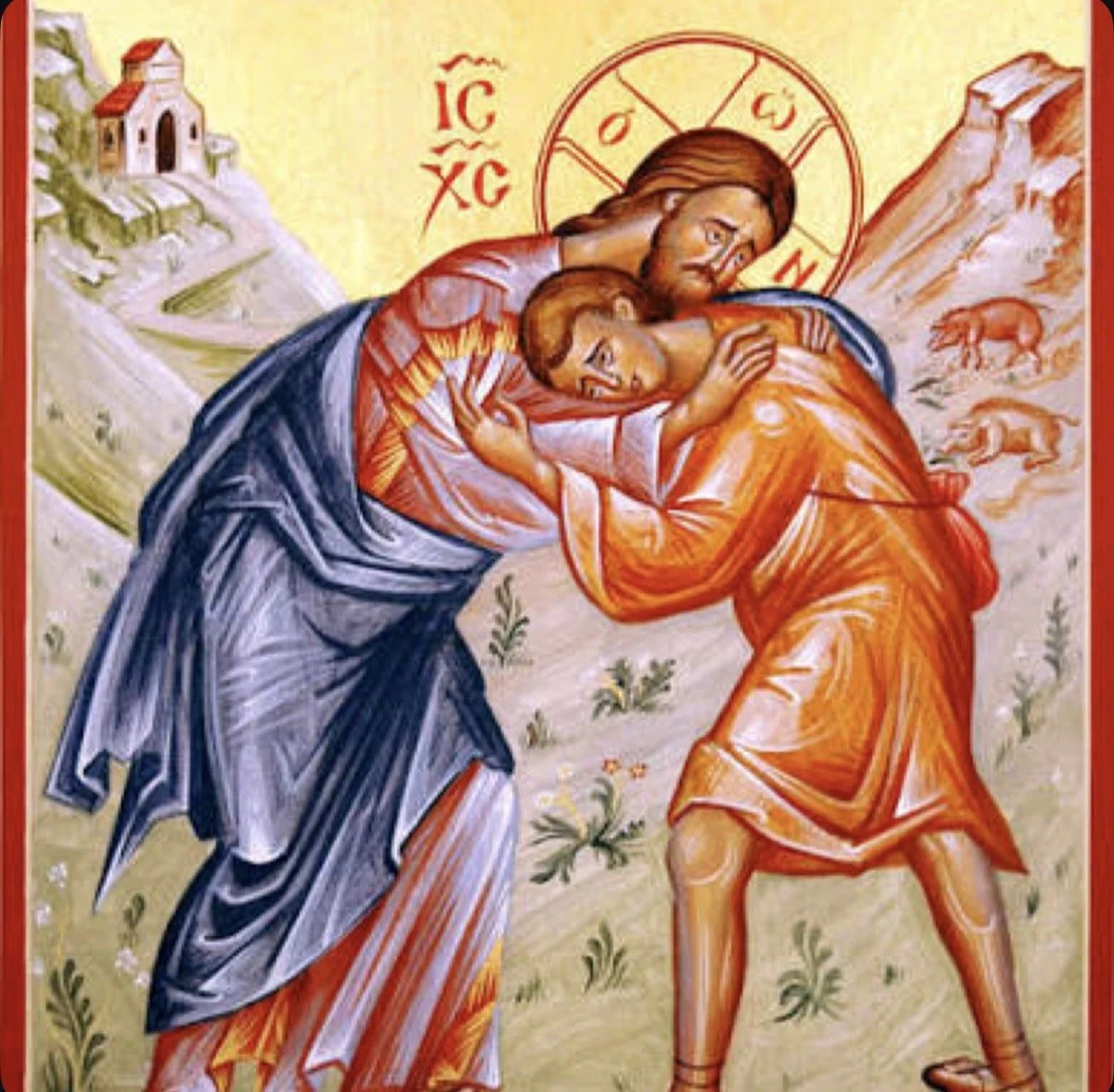
For some reason, even considering every other wrong move or terrible situation in my life, God is by far the most difficult thing for me to talk about. The Old Testament haunts me and makes me afraid and angry. The gospels make me cry. I’m not sure! I don’t know. I love Saint Peter because I too have a temper that can ruin. I love the prodigal son because I am him.
I think a shared sorrow of humanity is that we pretend (we?) to know God, but I think we misunderstand him. This should definitely go without saying, that humans would perhaps miss the mark at successfully comprehending something so completely beyond us. However, I think a lot of the time we miss the central message of Christianity, that God is intimately aware of human suffering and voluntarily entered it with us. It’s something I have to remind myself when the spirals get particularly bad, that obsessing over the illusion that I am somehow past forgiveness belittles the cross itself.
God remains in the sacred in betweens, as far as I’m concerned. The grieving and the giving and such. I do my best to meet him there.