

Prom Vagabonds, In Conversation
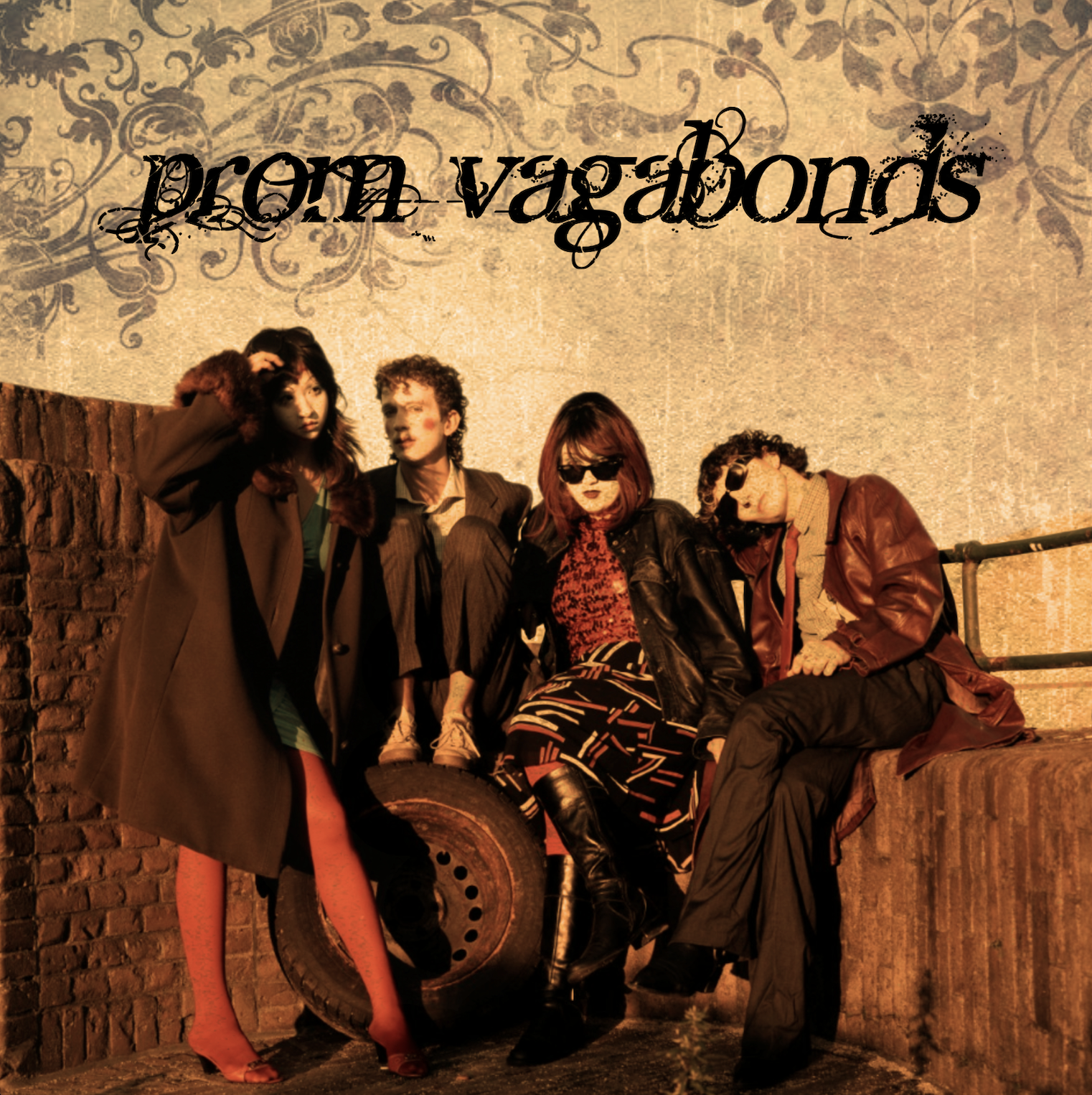
Consider me gutted from the inside out. Prom Vagabonds, Amsterdam’s chosen noise-rock, dream-grunge act, graced the stages of multiple underground venues in the city (and beyond) this past September. Lucky me: I just barely caught them in their final scheduled appearance at Vondelbunker, as part of Kronkel Festival’s programming, the one-day multi-venue event celebrating underground culture in the Dutch capital.
Prom Vagabonds, to me, means accessing phantom memories; dream-like visions infesting young minds with spoiled desires, those images turning into nightmarish carousel rides populated with impish characters. It means walking into a ball wearing your best blood-red sequin dress, only to witness your object of desire walk into the arms of someone else. The teenage fantasy turns sour; there’s not much to do other than purge longing out of your bloodstream with a good perverted guitar riff. I’m in for the ride.
The ‘yearning quartet’ is composed of Maria, singer and occasional guitarist, drummer Jeanne, bassist Emil, and guitarist Simon. Active in the scene for a few years, they have released multiple singles, such as Candy’s Spinal Surgery Dream and Scarecrow. I first came across them thanks to their participation in the 2025 edition of Stukafest, the student music festival, which I got to organise that same year. Over a year later, I got to sit down with them and ask all the questions I had carefully tucked away. Call it fate, call it persistence, call it stalking: I got the answers I wanted, and I’m here to share them with you.
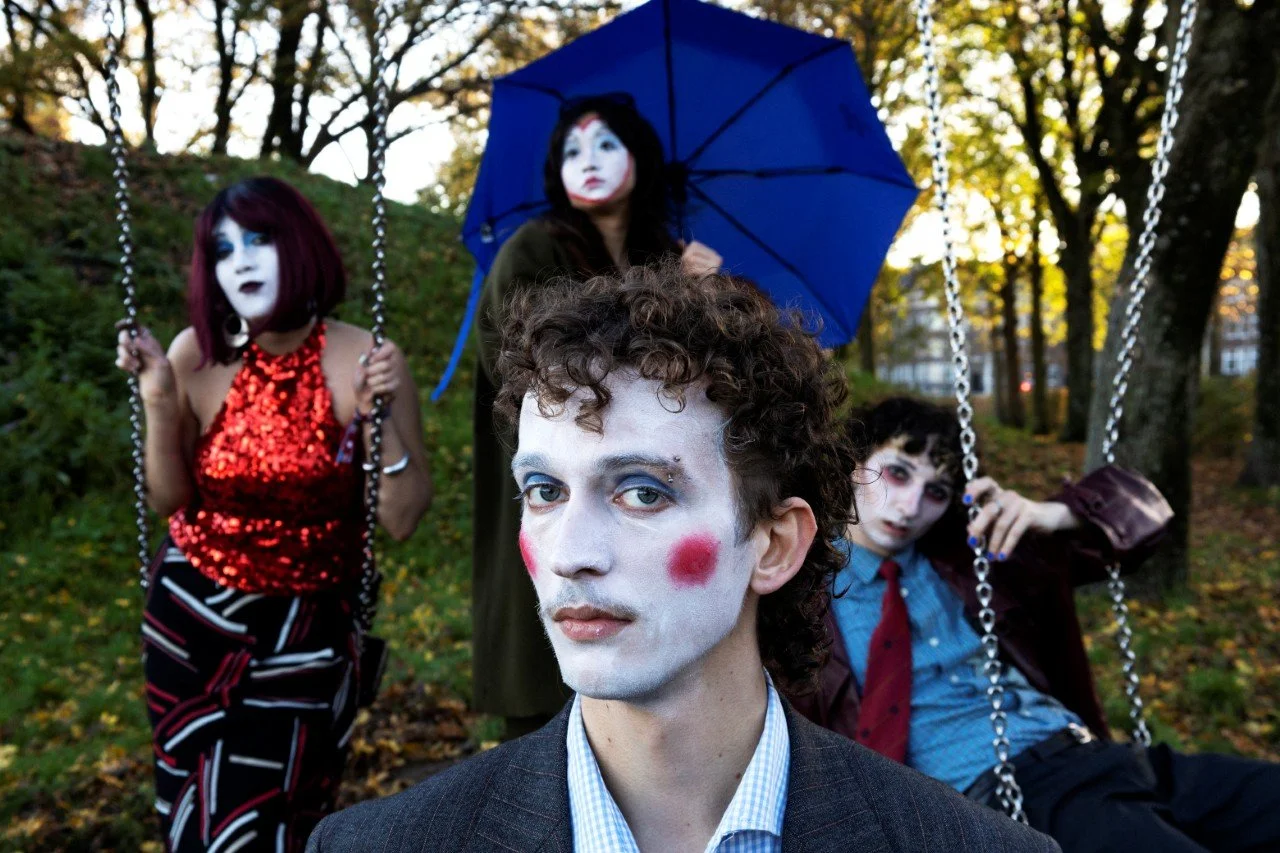
Simon, Emil, Jeanne and Maria.
Carolina: Seeing you guys play last night after so long was amazing. Was it as good for you as it was for me?
Prom Vagabonds: It was so fun. Vondelbunker is always home for us. We love the community there.
C: You are pretty established within the indie/underground music scene here in Amsterdam, I’d say. But assuming that the reader is not familiar with you guys yet, how would you introduce yourselves– how would you like someone to get to know Prom Vagabonds?
Emil: Well, we all sort of have similar stories, meaning that we came to Amsterdam individually to study, and ended up connecting with each other out of our own desire to make music.
Jeanne: Yes, I think it’s important to say that we are friends first, and a band later. None of us come from a formal musical training background. We connected out of pure love and appreciation for music. We all come from different environments and have different references for music, and we came together through fate. Well, through Maria. She met all of us individually.
C: She brought all of you together?
Maria (laughing): Yes, that’s true. For example, I straight-up texted Emil shortly after I met him, saying ‘I WANNA MAKE MUSIC!!’ after having learned that he played the bass. Prom Vagabonds sort of just came together in that way. Well, it took some time, of course.
Jeanne: Yes, well, so we did actually start out as a band first. But we then got so close that we now think of each other as friends who play music together, not as colleagues.
Maria: Yes, and it’s through seeing live music together and being part of the underground scene here that we became so united. Going to concerts together is a quintessential experience for us.
C: That’s so interesting, because I wanted to ask you guys how you felt about the music scene here, or if you could describe what the scene means for you as an indie band. It seems to me that you have a really strong connection with specific venues, or even with other bands.
Simon: We definitely do. I mean, for us it all kind of began with Vondelbunker. They really helped us get started. For me, personally, this really goes all the way back to squatting culture in Amsterdam, with places like, yes, Vondelbunker, but also OCCII.
Jeanne: Yes, we had our first show at Vondelbunker, when they used to have open-mic nights. This was when Simon had just freshly joined. I mean, we had met Gigi, also known as Bandgurl666, at another open-mic, and she informed us that there was a last-minute open spot to play at Vondelbunker. That’s really where everything started: with people from the Amsterdam scene, like Gigi.
Simon (laughing): Yes, Gigi is pretty much our mother.
Jeanne: She does so much for the scene, and for bands or musicians like us, who are just starting.
Emil: She sort of acts as an advisor for us, from how to manage promotional material to more technical advice for when we have to perform. We really owe so much to people like her.
C: It's amazing to see that you have so much fondness for the scene and its people. It’s clearly integral to who you are, as you still perform in these spaces. It seems to me that you have really built yourself a reputation within the scene, as well as some very important connections. I mean, you just came back from a month-long tour where you performed not only in Amsterdam, but in the Netherlands too. Can I ask how you feel it went, and whether you are going to perform again anytime soon? What can we expect from PV in the future?
Jeanne: It went great! And, actually, we just got a shared rehearsal space with this other band named Books, who we really love. They played after us yesterday.
C: It was my first time seeing them, and it was truly an insane experience. Shoutout Books!
Jeanne (laughing): Yes, true. So, well, now we really need some time to explore our sound, as well the direction we want to go into next. We are thinking, for example, more trip-hop, post-rock…
Maria: Shoegaze…
Simon: Grunge…
Jeanne (laughing): All the words. Well, now we are going to try to be more intentional with the directions that we explore, especially seeing that none of us comes from that formal musical training background. We need to craft our sound, and we have the time and space to do that now.
Emil: Yes, to explore our next project, basically. Not in the strict sense of an album or body of work, but especially to work on our identity and sound, now that we don’t have the pressure of upcoming gigs, for which we would have had to rehearse our older pieces.
C: I know that we are talking about your sound and music seeing that you are, well, a band, but I really want to touch on your use of visuals. Amongst all of the different things you have going on for yourselves as musicians, I think your visual presence is something that truly sets you apart from other acts within the scene, in the sense of having a visual output rather than just a musical one. And I think that you already know this, and that you play on this really heavily. You describe PV as being in between ‘noise-rock, sequins, and 90s Brazilian soap-operas’. That’s incredibly specific, and I doubt it was a random choice of words. I think this especially applies to your music videos. Can you talk me through your latest one, Candy’s Spinal Surgery Dream, and the process of making it?
Maria: Well, our interest in aesthetics was part of PV from the very beginning; we would choose a visual theme for each of our performances, and base our outfits and set design around it. It was something very theatrical that we did to expand the experience of the performance as a whole. It’s a sort of ritual for us, choosing together the outfits for a gig.
Jeanne: Our visual references and obsessions are also very similar most of the time, and we love to involve the audience in our visual world.
Maria: Exactly. And, well, personally speaking, I am very inspired by cinema, and by its sonic and visual universe. We also all love music videos, and all of our songs have a visual identity. For Candy’s Spinal Surgery Dream, in particular, the lyrics came from a dream I had about watching myself getting spinal surgery. It was a completely surreal experience, and that’s where the visual look came from.
C: It’s a spooky video, but not scary, more so theatrical and fun.
Maria: Yeah. And then we adopted a similar spooky, silly vibe for the bass and drums.
Emil: Also, we relied heavily on connections we made within the scene to create the video, as in the case of our director, but also for the set design and props, such as the puppet coming out of Candy’s spine. It’s made of felt, actually!
Maria: We had to learn so much to produce this video, such as writing a script, following a schedule, managing the crowdfunding, and combining our ideas together with those of the people helping us through this project.
Emil: This also goes back to the Amsterdam scene for us, in terms of the massive help, as well as knowledge and experience that we received from people in the scene.
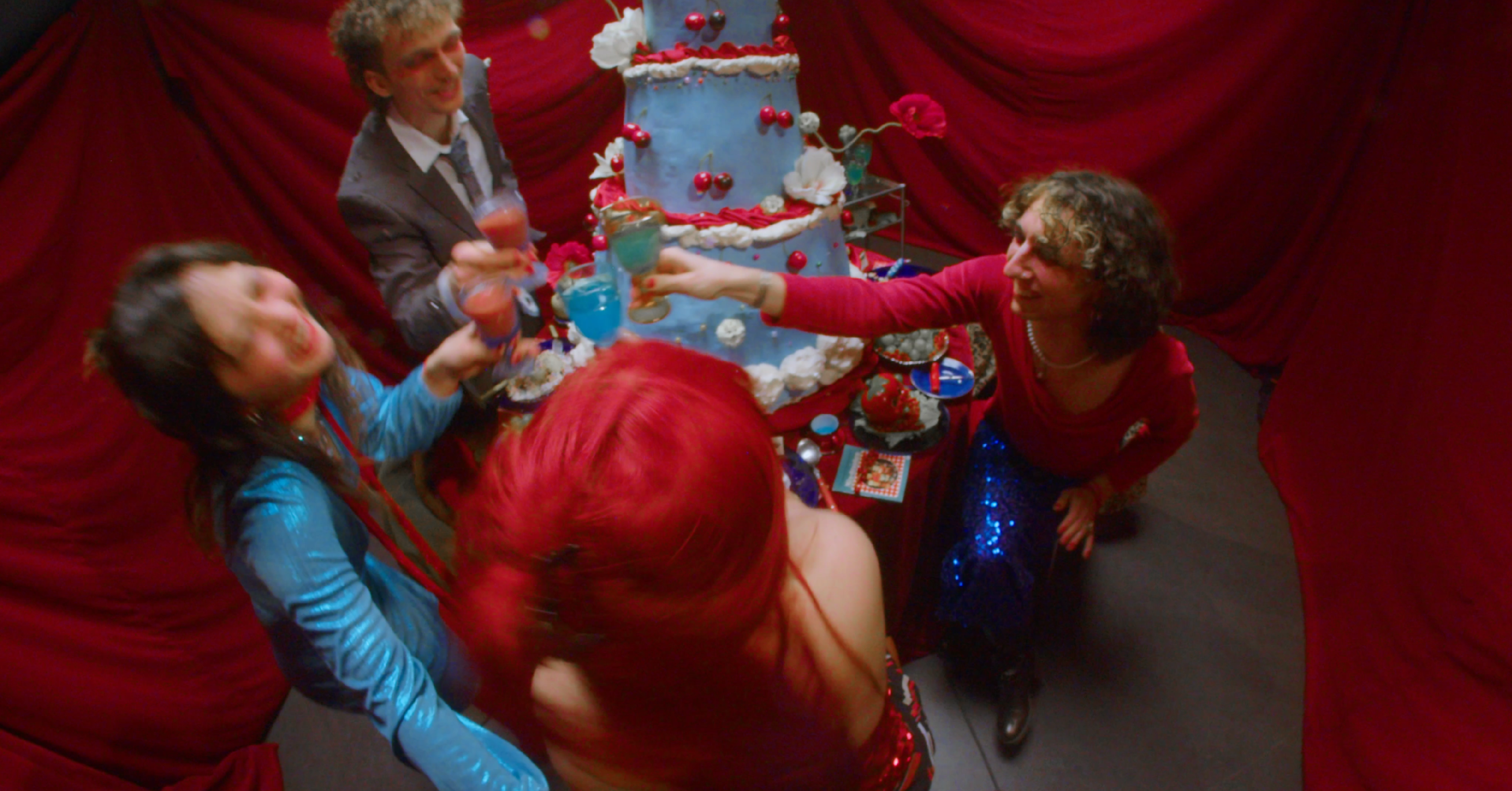
Candy’s Spinal Surgery Dream music video and PV’s spinal puppet.
C: The fact that you were able to pull this off really speaks to your commitment to the project that is Prom Vagabonds. It’s almost a way for your audience to engage in your world-making, beyond just the music. It’s also not the first time you’ve produced a music video.
Maria: Yes, we have done that before with Scarecrow, for example. It was an even more DIY process than Candy’s Spinal Surgery Dream. We used a camcorder and we all sort of directed it together.
Emil: There’s lots of other acts in the scene that have their own visual identity, though.
Simon: Yes, such as Dear Omen, or Katie Bitchcoin…
Maria. Books, L’Orne…
Jeane: Milkboy, as well. But also the Cavegirl project, which I am a part of.
Simon: As well as Mother Johnson, who were part of Stukafest with us in 2025.
C: These are all amazing references. Now that we have talked about your use of visuals and your aesthetic influences, can you tell me about your song-making process?
Maria (laughing): Well, I’m very active on my Notes app. It holds all sorts of thoughts, word combinations, or even things that people told me or that I heard somewhere that I find interesting. That’s the main inspiration for our lyrics. And then Simon and Emil will sort of come up with a riff, which immediately creates the feeling of the song. I will then fit the words around that.
Jeanne: The way we put it all together, though, is starting to become almost telepathic. We actually don’t speak much when we’re deep in the song-making process together. It just flows.
Simon: We think of it as having the ‘ghost of the song’ in the room with us. Meaning the song’s character or identity. And we find ourselves sort of running around the room, trying to catch the ghost and put all of it together.
Maria: It can be a truly magical moment for us, in the way we will be in complete disbelief at the creative flow that we are experiencing.
C: The song as a ghost. That’s such an interesting way to put it. What I am also trying to understand about Prom Vagabonds is whether, when thinking about your music, you envision yourselves as part of a larger musical tradition–in terms of, for example, a genre– or whether making music for you is a process somewhat unrelated from your musical influences, for instance.
Maria: I don’t think we ever make music with a specific genre in mind, but we do think of it in terms of what it is that we love about music, and what are the feelings that we want to evoke for our audience. Such as a feeling of urgency, of movement, or of catharsis.
Simon: Personally, I think limitations such as genre identity ultimately inspire us to try and break those boundaries.
Maria: The goal is to make people feel equally inspired, rather than categorize the music.
Jeanne: And speaking of musical influences, I can for example say that witnessing the underground scene in London during our trip to England was incredibly inspiring. It has this urgent, emotional quality to it.
Emil: And while we all have our individual musical influences, they all sort of come together in the end.
C: That you speak of catharsis in relation to your performances is so interesting, because that is exactly what I felt when I saw you guys play not only yesterday, but also almost two years ago at Stukafest. It seems that you have been staying true to yourselves in the meantime. Does the way that you describe your music–in terms of an emotionally charged release–hold true for you as individuals as well, rather than it just being a feeling you try to create for the audience?
Maria: One hundred percent.
Emil: Performing live has to be one of the top-three feelings I will ever get to experience.
Jeanne: Yes, I think of it as a sort of transcendent experience, in the sense that it feels like I'm in a trance.
Maria: Music is how I experience everything in life, and being able to share our music through our performances is definitely the best feeling in the world for me.
Simon: I also think of performing as a therapeutic experience, and I would describe it overall as a feeling that is bigger than the accumulation of the people in the room.
C: That’s a beautiful way to put it. I have one last question. Why the name Prom Vagabonds?
Maria: Well, let’s see. I had sort of a… medieval phase. And Jeanne and I used to say ‘my vagabond’ as a term of endearment to each other, as a way to mean ‘my love’. When the time came to settle on a name for the band, we were looking for an expression that could encapsulate the feelings we were trying to represent– such as nostalgia, desire, angst, or any other of these emotionally charged sensations. And ‘prom’ felt like a deeply yearnful word. I think that’s what we most want to convey: the experience of yearning. So, that was it. Prom Vagabonds.
____________________________________________________________________________________________________________________________________________________________________________________
My deepest thanks to Prom Vagabonds for sitting down with me for this interview. While they are going to focus on their sound for a while, you can catch the debut of Cavegirl at OCCII on the 12th of November. Also, don’t forget the Masquerade Prom Ball, hosted and programmed by Prom Vagabonds, which will take place at Cinetol in May of next year. I’ll make sure to be there, wearing my best prom dress. Glitter guts and all.