

A thin woman sits at the hospital reception. I walk up to her desk, and we eye each other from opposite sides of a clear plastic barrier, the corners of her mouth curled up absentmindedly. I recognize her. She does not recognize me. Hello. Her eyes are large and light blue and framed in heavy black eye pencil, a bit sad, or maybe that’s the story I’ve always told myself about her. I’d always thought her to be very beautiful, and all my friends too. They used to joke about it sometimes; they’d say, “You should date his mother instead; she’s single AND hotter.” My boyfriend at the time would scoff; he’d wave his hands around in disgust and rub his temples in half-feigned frustration. And no one could help but laugh, him included, because she really was that good-looking. "I am here for an examination," I say vaguely. She searches for my name in the schedule, then reads it out loud, now smiling with recognition. Asks how I’m doing. "Down the hall," she says then.
The doctor is leaning back in his chair, listening to my explanation of how yesterday, after cracking my knuckles, I watched as my pinky finger doubled in size and then turned a nasty purply-blue, and here is the evidence. Ha ha, I add between words to show that I too am in on the joke, the joke being that I am twenty-two and that this is all really embarrassing. To give him an example, I fold my ring finger inwards until the middle knuckle makes a ‘pop’ sound. That’s not very clever, he says. Don’t do that. "Ha ha ha, I reply. He then takes me to another room for the X-ray. s p r a i n, he types into his computer after, using only one finger. Don’t do that, he says. Not very clever. Prescription: r e s t. Outside at the reception, the thin woman doesn’t seem curious about me at all anymore, which I find admirably HIPAA-compliant. I get the impression that I have wasted everyone’s time. We exchange polite smiles, and she hands me a piece of paper stamped and warm from the printer and a CD with (presumably) a picture of my normal hand and equally normal finger: no cracks or fractures or anything otherwise medically interesting. Not very clever.
On my walk from the hospital, the sun gets to work on burning a hole through my scalp. It is a blazing hot, concrete-melting day, one of the last I have left to spend in my hometown for the summer. Embarrassment washes over me first, heavy-set and adolescent: at the hospital with a self-induced finger injury, one caused by something every single one of my nosy elderly Slavic family members kept warning me not to do (because cracking my knuckles would give me arthritis, or Parkinson’s, or Alzheimer’s). Then, something like nostalgia, like a closure: the woman, the mother, with the sad eyes.
*
Seven years ago now, when I was fifteen years old, I got into my very first relationship. My boyfriend (of course) only ever wore black, he (of course) played the bass, and, in true adolescent fashion, he was (of course) always just a bit cold towards me. Before dating, we’d only ever been what I’d describe as peripheral friends: at the cinema, I would gaze at him longingly from three teenagers over, hoping our hands would touch in the 3D-glasses bin later. When I confessed my crush to him (and quite literally confessed, outside his house, like in the movies), we went for a walk around the block. He was mostly curious about what exactly I liked about him and if I could go into detail about the where and the when and the why. Our hands had never touched before, on purpose, on accident, in cinema, or otherwise; in fact, this was maybe our second one-on-one conversation ever, so he could (understandably) not name anything he found remarkable about me at all. It was a cool evening, and we did not make eye contact. He then agreed to become my boyfriend with a degree of ambivalence I had never thought possible.
Six months later, after our relationship’s inevitable demise, I was left with all these objects, which now seemed cursed to me: a carabiner he had “borrowed” from his father’s mountaineering equipment, a pocket folding knife he gifted me for Christmas so that I could “defend myself” (when I asked what from, he did not elaborate), and a necklace with a metal guitar pendant from his last school trip, in its original packaging. I stored these away in the third drawer of my desk, where I kept letters from old friends, faded bus tickets to bigger and more interesting towns, photo albums, and other memories so potent that the drawer had a very particular smell, neither pleasant nor unpleasant but always strong, one that I can still remember. Then I cried to my mother about how I would never love again.
*
At nineteen, before moving away for university, I made the conscious decision not to bring anything from this drawer with me: at nights, I would sometimes scour through it to see if I could shake old upsets back to life, and the answer was always a resounding yes. Though I’d long since stopped missing the friends and the lovers, for years, I was still well able to stir up nostalgia for a certain time in my life just by looking inside. This sentimentality around things had followed me through every age, every friendship, and every relationship: I was the dutiful archiver of the good times and the bad times, and as a display of intimacy, I would show off my collection to chosen others, with the stern expression of a museum curator or a stolen art dealer. So, I vowed that, at university, I would develop a different archive of trinkets to make me upset about different people and different memories.
When I broke the news of my move to a close friend, I told her that what I was most excited about was the prospect of leaving things behind. “I don’t think we ever leave anything behind,” she said. Some things follow us wherever we go. I took her words personally: for months after moving, I motivated most of my life choices by spite, tried to live in a way that diametrically opposed her words and that would, next time we saw each other, serve to prove her wrong. I did indeed love again, then chose to leave behind a relationship that had at that point barely started. I chose to move as far away as I feasibly could, and I put all my stock into newly formed friendships. I told everyone who would listen how much I disliked where I was from in the hopes that, one day, I could be seen as coming from nowhere in particular. Unaffected by geography and population density. Untouched by people.
Throughout my teenage years, I had spent so much time reflecting on how other people had changed me, yet I always made the mistake of assuming that change is a conscious act, on my behalf or on behalf of the other or on behalf of both. I thought of big things: I thought arguments and I thought graduations and I thought moving boxes and I thought difficult decisions. A connection in three acts—this is the end of the second, and I’d spend the third act rummaging through old drawings and listening to the most heart-wrenching songs I knew. A grief narrativized, grief nonetheless, but one always ready for a big-screen adaptation. A grief that could, as a result, be discarded and exchanged for new griefs at will. And in turn, change as something whose path I should be able to trace back with my finger, no matter how winding, all the way to its origin. And sever it.
This was, of course, a temporary delusion. As soon as I moved away from home, my new life turned into an almost comical display of old patterns, proof-of-concept: all the connections I had cut weighed heavy on me, and journal entries from five years ago read the same as that day’s. And though I tried hard not to, I often made old mistakes with new friends, I saw glimpses of my town in corners of the big city, and I evaluated everything according to the metrics I had developed somewhere far away, sometime long ago. My geography came back to haunt me in waves, and my history too. I missed the relationship I had left behind; I missed the people I had fallen out with. I remembered that quote from the coming-of-age film Lady Bird: Don’t you think that maybe they are the same thing: love and attention? I had made the mistake of paying too much attention, and as a result, I could close any drawer I wanted: love for where I came from would come pouring in all the same.
*
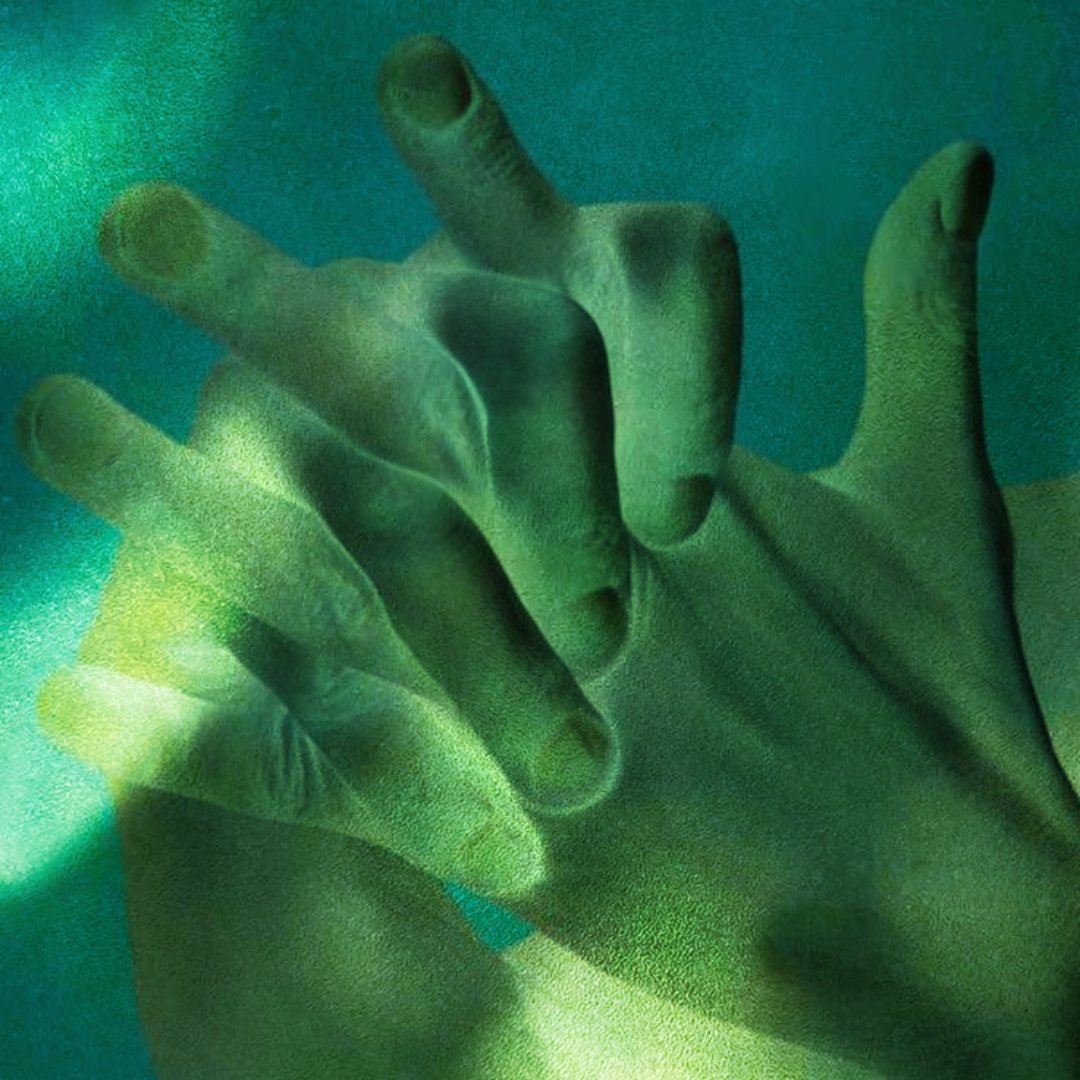
At fifteen, every time we’d see each other, my ex-boyfriend would hold my hands in his and, one by one, fold my fingers inwards, in the middle of each finger, until we’d hear a click. Then he would do the same to himself. Before him, it had never occurred to me to do this: I cracked my knuckles the way most other people did, my hand in a fist or fingers interlocked and stretched outwards. Now I had another bad habit to add to my repertoire of joint-snapping, skin-picking, and lip-biting, and I kept at it for years, to the disdain of both of my grandmothers and all of my great aunts with still-intact hearing. At some point, the origin of this habit faded from my memory completely: I even repeated it with a different partner years later, as if it had been my own idea (this partner, however, did not share my enthusiasm).
Had I not seen his mother that day, I would have gone home believing that I had injured myself (though embarrassingly mildly) enacting something I had made up myself. Something that had, in fact, been shaped by someone else’s fondness long ago. Fondness, however small, however long ago. Something like nostalgia, like closure: maybe we never leave anything behind. Never move out of towns, not really. Never become strangers; keep brushing against each other, though we may never meet again, and sprain each other’s fingers years after the last hello.