

Belonging to Things
I grew up around consumer culture in the 2000s. When I was a child, there were cheap, mass-produced toys that were sold at any venue with kids' events. It was the same setup every time. You walk into, let's say, a theater, which today would be showing a kids' program. While you make your way to the changing room, you see a shopping table with rows of glitter fairy wands, mass-produced dolls, and plastic bracelets. Your parents start walking a bit faster, hoping you wouldn't see all of it. Then, while approaching the hall where the show will be, there are even more of these stalls. Of course, your small kid's brain reacts to the shiny colors and the abundance of different options. I remember asking my parents each time to buy me something; usually, they did. I ended up having a whole bag at home filled with these plastic goods. I didn't even play with them that much.
Now, looking back, I realize I didn't actually care about the specific toys — I just wanted to fit in with the other kids. At school, you were considered cool only if you could keep up with bringing new toys once in a while. Of course, back then, I didn't reflect on what I was doing, but that was the time when the link “owning things = social belonging” formed.
In the same primary school, I had a classmate who wore the same 2 dresses interchangeably for the whole year. She didn't look much different from the rest of us — we had a school uniform kind of situation. Yet, many kids sensed that something was “wrong.” Either way, word got out that she wore secondhand dresses. The bullying afterwards was pretty bad. After that, my fear of having something used was fueled by my mom's comments—“What “if someone died in that?”
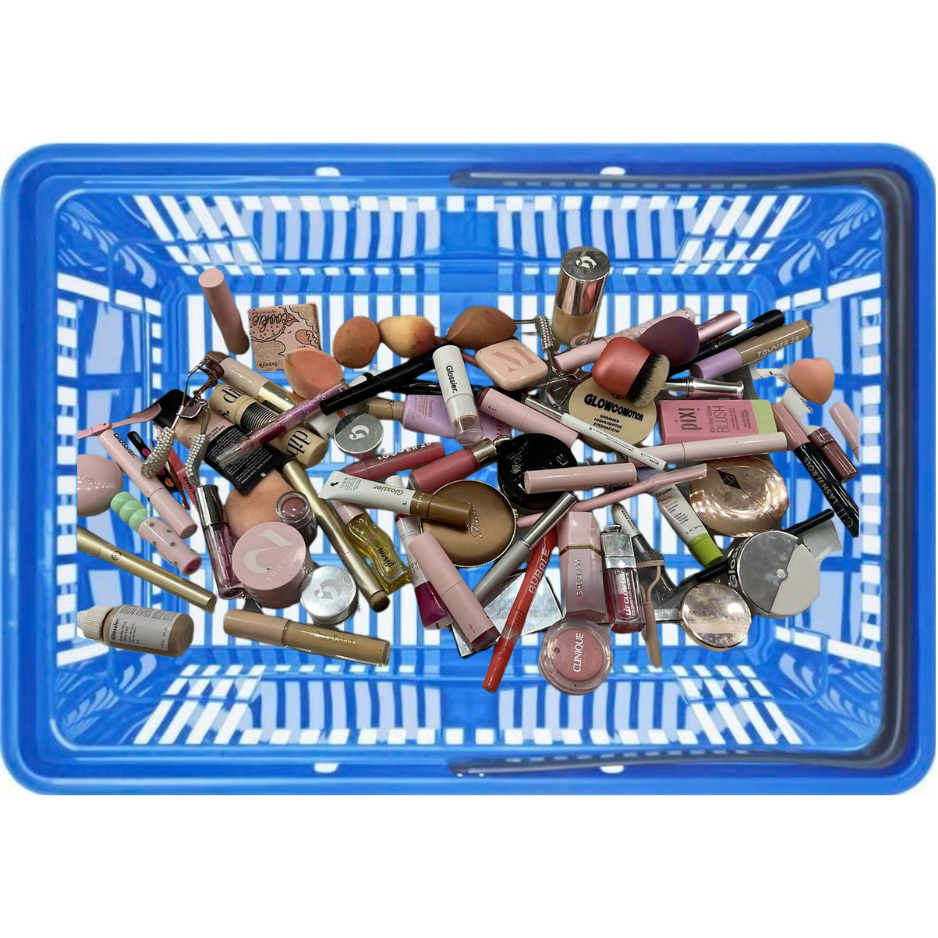
When I grew older and got access to money that I could spend however I liked, I fell victim…to the makeup stores. I lived in Moscow, and it had an extremely popular shop, the equivalent of Sephora or Douglas, but even bigger. It had these distinct bright lime green paper bags. An army of women with green bags who parade through the city center. And I felt so cool being a part of it. I, too, became one of the green-bag soldiers, a part of the crowd that took weekly trips to the makeup store. It was a social ritual.
The same girls who asked their parents for glitter toys 10 years ago are now collectively storming makeup stores. The sense of belonging to a bigger group stayed the same; only the context aged, along with the girls.
For a long time, splurging on random items was an easy way to get gratification. This, however, barely lasted even a few days. So I spent money on things that didn't bring me joy to use. But I was craving the feel-good chemicals, so I kept coming back to the store over and over. Not to mention that I couldn't escape the social belonging aspect of it.
Over time, these purchases kept piling up, and I didn't have any use for them. Who needs 10 different lipsticks? In fact, I got annoyed at having wasted money on things that I actually don't like. Before I moved countries, I threw out most of the things that I had and started fresh with my much smaller collection.
The other day, I sat down to do my makeup before going to class. The same daily ritual. I go through my relatively small collection of products—one or two per category. When I reach for the foundation, I see that there is barely any left. Shit. I have to leave in 10 minutes, and I need my skin to look okay. I try scraping at the tube packaging. And it totally worked. Now I have one more month of foundation. Almost as if I created stuff out of thin air.
The thought that I can postpone spending money is suddenly comforting. But there's another thought co-existing at the same time—soon, I will get the dopamine hit from going to the makeup store, walking through the aisles, and choosing something new. I still like spending money, but now it's more meaningful. Now there are two conflicting feelings—how good it feels to buy new things and the guilt that comes with wasting money.
I started noticing that owning things and using them until they run out can also be a source of happiness and satisfaction because I finally found something that works for me, and I don't feel the guilt of wasting money. If I take good care of the things that I own, they bring me more joy because they feel almost as exciting as when I first bought them. These things don't have to be new.
Remember the thrifting shame? Now the cultural tide has largely shifted towards more sustainable options. And I jumped headfirst into proudly wearing a jacket that my friend thrifted and gave to me and going to a “pre-loved” clothing store. The word choice here is deliberate—not “used” or “secondhand,” but “pre-loved.” See? Sounds way better.
A lot of people now pay extra attention to being ""sustainable"—buying a new t-shirt at a store like H&M and a local thrift shop costs roughly the same, but the latter is often viewed as cooler because it comes in a package with the feeling of being considerate and arguably more fashionable.
The social belonging didn't go anywhere; just the context has changed. I never could separate myself from the present cultural dynamic, whether it was getting on parents' nerves about a new shiny piece of plastic, binge-buying makeup with my high school friends, or thinking twice about my purchases. Even when I saw these urges as my own, I was still, in fact, behaving as part of a group. I now associate myself not with mindless consumption, but with the opposite of it. Even when we think we are being sustainable, we still define ourselves through our consumer choices.