

Flower Dress, Flower Womb
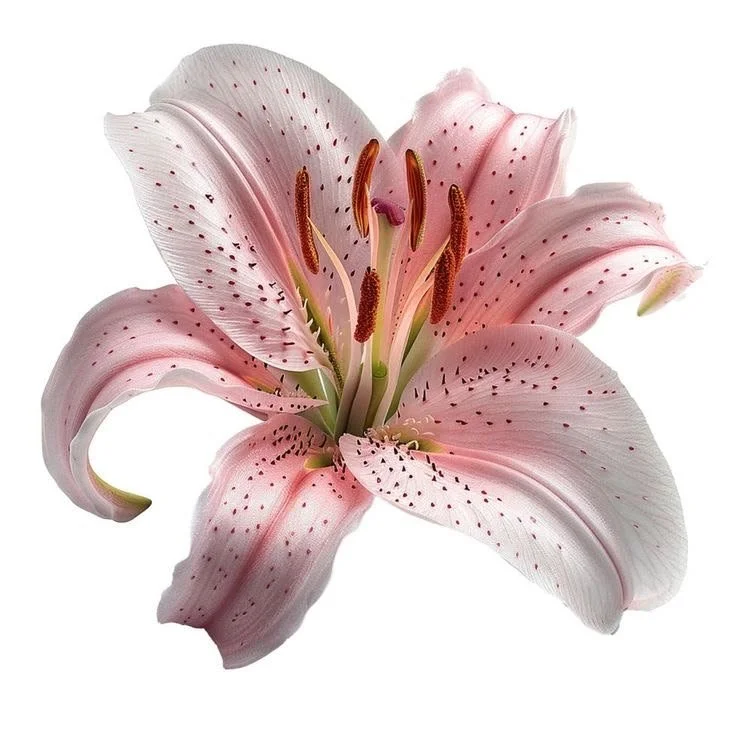
The earliest written record of the concept of the Earth as a mother, or a woman, dates back to the 13th century BC in Greece, where Gaia, mother of Demeter, goddess of the harvest, is referred to as the goddess of the Earth. In ancient Roman religion and mythology, Tellus or Terra is the corresponding personification of the Earth as a goddess, similar to the Etruscan Cel. In the Native American religion of Ojibwe, Nokomis is known as the Grandmother, or Earth-Mother, who feeds plants, animals, and humans, while in South-Asian Buddhist mythology, Phra Mae Thorani is revered as the ‘Mother Earth Goddess’. In an abundance of languages with grammatical gender, the word for ‘nature’ is characterized as feminine.
Ecofeminism is an ideology and movement that sees climate change, gender inequality and social justice issues as linked consequences of a ‘masculine’, patriarchal logic of domination and exploitation. It draws parallels between the treatment of both women and nature at the hands of men and, in some cases, conflates the two under one, single, nebulous entity. First coined in France in the 1970s by activist Françoise D’Aubonne, the term has come to signify multiple strands within the movement, which all ultimately assert that the destruction of nature and the oppression of marginalized groups share the common cause of patriarchal capitalism. Other than drawing parallels between the treatment of women and nature, ecofeminism also highlights how in the era of climate change, it is women, especially women of colour, who bear the brunt of changing environmental conditions, intersecting the movement with other social justice issues such as race, class and colonialism.
Nature, as the excluded and devalued contrast of reason, includes the emotions, the body, the passions, animality, the primitive or uncivilised, the non-human world, matter, physicality and sense experience, as well as the sphere of irrationality, of faith and of madness.
Val Plumwood
Ecofeminists, such as the Australian philosopher Val Plumwood, have noted how women have been historically characterized in a similar way. Male thinkers, from Cato to Freud and Hegel, have held women’s perceived closeness to nature as a signpost for their animal-like irrationality and emotionality, making them unfit to learn or rule. Insisting on the parallels between women and the natural world, then, may seem puzzling at first.
Not all ecofeminisms are created equal. As the movement continued to develop in the second half of the 20th century, different schools of thought began to form. Where on one hand radical ecofeminism sought to examine how the equation between nature and women at the hands of men ultimately degrades both, cultural ecofeminists cited women’s biological functions (such as lactation, pregnancy and menstruation), as well as their translation onto gender roles tied to familial nurturing and providing, as fertile grounds for association between women and the environment, speaking both physically and metaphorically. And where the former looked at the patriarchal exploitation of women and nature through their commodifiable physical traits –think of, for instance, industrial farming, or commercial surrogacy– the latter took inspiration from nature-based religions and goddess worship to celebrate both nature’s intrinsic spirituality, as well as women’s unique sensitivity to the booming environmental degradation.
❀
This second strand of the movement has been particularly criticized by Plumwood, who explains how this ‘romantic conception’ of both women and nature ultimately performs the antithesis of the feminist agenda through the vindication of the ‘barefoot and pregnant’ feminine ideal, one that inevitably validates women’s exclusion from the cultural and political sphere by relegating them to the mystical world of trees, flowers and all things botanical. Such an idealized approach to the ecofeminist movement, in fact, risks sketching an unrealistic feminine optimum, that of the good woman, the caring, nurturing and life-oriented mother-to-all, fully disassociated from the ‘masculine’ world of reason, culture and technology. And while an unquestioned self-identification with Mother Nature does not necessarily prevent cultural ecofeminists from fighting against the subjugation of both women and the environment, it veers a little too close to the line that says that women should not be granted equality because they are, firstly, humans, but because they are intrinsically morally and spiritually superior. Such an approach would in fact be consistent with biodeterminism (not to be confused with bioessentialism), as it makes normative claims about fixed, anatomical features; in simpler terms, it describes women as ‘inherently good’ based on their ability to bear children, under the guise of a vague, spiritual connection with the natural world. Interestingly, women’s spiritual propensity and inner sensibility to the divine and mystical have not historically translated into actual forms of spiritual power and leadership.
This is an argument, with its Christian overtones of fall and feminine redemption, which appeared in Victorian times as the view that women’s moral goodness, their purity, patience, self-sacrifice, spirituality and maternal instinct, meant either that they would redeem fallen political life (if given the vote), or, on the alternate version, that they were too good for fallen political life and so should not have the vote.
Val Plumwood
With nature’s anthropomorphization as female having historically been the cause for women’s dehumanization and for their relegation to the domestic sphere, marking their exclusion from the rational world, we can say that at any point in history, women’s unquestioned identification with the natural world holds counterproductive potential for the feminist movement.
Forms of material power such as money, politics, or ‘real’ labour –as if domestic work wasn’t the ultimate form of labour– have been historically characterized as masculine. From this perspective, the work of some ecofeminists towards the reclamation of an intrinsic ‘feminine power’, one that men would not be able to access, is understandable. So is a reflection on how natural cycles sometimes mirror women’s biological functions in uncanny ways– think of the cycle of the moon and menstruation, or of women’s changing hormones and the sea’s ebbs and flows. But the feminine virtues sketched by some ecofeminists should apply to women as individuals, not as a class; and finding the basis for these supposedly universal traits in women’s reproductive capacities proves all the more problematic. Not all women, in fact, desire children, or even possess maternal instinct; and not all women are empathetic, nurturing individuals. Women are capable of conflict, of domination and even, in the right circumstances, of violence, writes Plumwood.And why shouldn’t they? Nature can be violent, too. The idea of man as master of the natural world is long gone. If we really do need to insist on women’s primal connection to the earth, let us turn our heads towards the vengeful, destructive Mother Nature, who can take life just as she gives it. If the connection between nature and women is so readily made on the basis of their common, exploitable traits, it risks relegating the feminist project to a historical time of passivity and subjugation, and crystallizing womanhood into the sum of millennia of abuse. It is, perhaps, time to stop playing defense.
❀
Such an approach to ecofeminist theory could be described as an early iteration of the movement, as many ecofeminists today hold a much more nuanced view of the relationship between women and nature. Biodeterminism and bioessentialism, however, still hold a strong legacy in the TikTok-ification and aestheticization of ‘divine femininity’ content. Divine femininity and masculinity are archetypal concepts that describe the interplay of opposite but connected energies. In Hinduism, for instance, the chakras Shakti and Shiva respectively represent power and consciousness; the Yin and Yang of ancient Chinese philosophy stand for the cycle of cosmic forces through which life is organized; and in mystical Islam (Sufism), Allah possesses both feminine (Jamal) as well as masculine (Jalal) attributes. Non-Western philosophies as well as spiritual practices have a long history of being taken out of context and commodified within Western cultures– just take a look at yoga. The divine femininity discourse, however, takes this tradition to a new level. TikTok and similar echo-chamber-favouring social media have completely bastardized an ancient and cross-cultural spiritual concept and turned it into a script for self-help and dating, with dangerous bioessentialist consequences. Creators urging women and girls to stay in their ‘divine feminine’ will describe feminine energy as soft, passive, receiving, empathetic, intuitive and go-with-the-flow, while masculine energy is action-oriented, strong, purposeful, logical, outwards and protective. The dating rulebook of divine femininity dictates that women should lie back, never make the first move, and always be provided for, while self-help schemas sell courses on harnessing women’s inner goddess to heal their inner child and manifest their deepest desires into existence. Passivity here makes for a strange form of power, one where it is women’s affinity to the divine that elevates them into self-actualized individuals, not their drive, resilience, inventiveness or intelligence. Unsurprisingly not too dissimilarly from the tradwife subculture, an aesthetic that could only be described as an alt-right pipeline, divine femininity paints domesticity as women’s privileged sphere, one where housework, raising children and financial dependence do not constitute real and unpaid labour, but rather a shortcut to the divine.
Adapting to the rules of the game, however, is not the same as winning it. Reworking outdated gender stereotypes into a new form of power, one that is intrinsically female, is a hopeful attempt at leveling the playing field between men and women, but it proves ultimately worthless in the face of real power structures, access to capital, education, legislation-making and involvement in both local and international politics. As for ecofeminism, there’s no doubt that we need a theoretical and practical framework to tackle women’s as well as environmental abuse, now more than ever, but the movement should position women together with nature, not as nature. A mindless identification with the natural world, or with the divine, to the detriment of material forms of action or resistance, will set us backwards. You are not a flower; you can speak, fight, hurt and change. Over and over again.