

Speaking of Feet
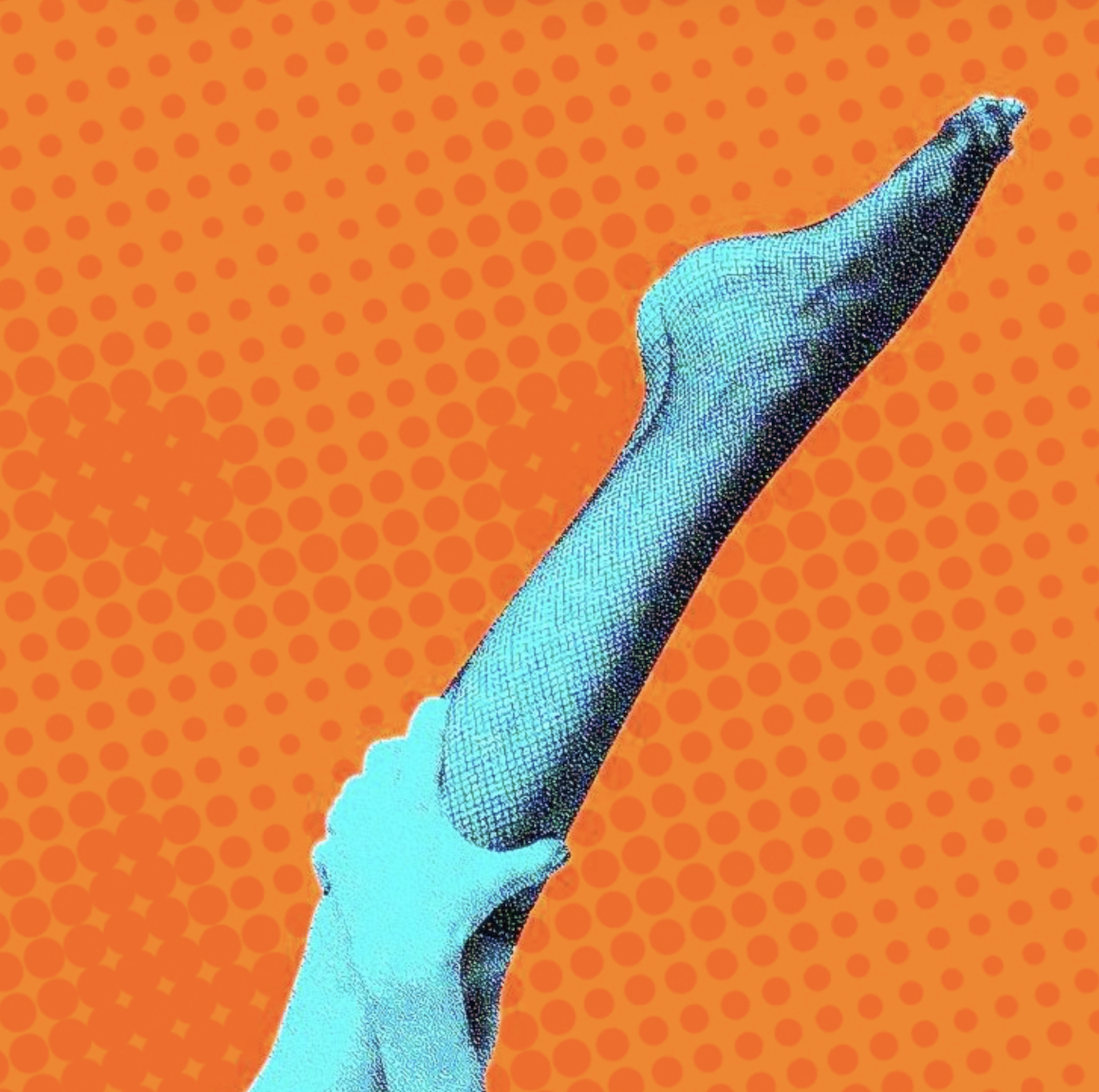
I was in high school when I first began noticing that everyone hates feet.
I had a classmate who never failed to point out someone’s bare feet during the five minutes before gym class, as everyone scrambled around the locker room, changing from their skinny jeans and Adidas Superstars into sportswear. As an avid wearer of no-show socks at the time, I often happened to be her target.
“Eli, I can see too much of your foot”, she’d proclaim. “It’s making me uncomfortable!”
As someone with slightly less-than-presentable feet, this never sat right with me. At a younger and more insecure time in my life, I often found myself overthinking whether I should be wearing open shoes or not, worrying that the sight of my feet would disturb someone. Eventually, it struck me as silly that I was spending so much time scrutinizing a part of my body that I have absolutely no control over.
Everyone has feet, I thought– why do we feel so strongly about them, then? Why do we hate them so much?
It could be said that, in many cases, the dislike of feet is caused by a fear of them. Fear of feet is called podophobia, derived from podos and phobia in Greek, meaning exactly what you would expect: “feet” and “fear” respectively. It manifests as discomfort experienced at the sight of others’ or one’s own feet, or even just the mere discussion of them. For example, my partner hates his own feet. He doesn’t own a pair of open shoes because, as he says, his feet are too weird to be seen in public. (I’ve seen them– they’re about as normal as they come.) While my partner’s discomfort is relatively mild, some people may experience it so severely that they avoid taking off their shoes and socks altogether, leading to infections, allergies, and a myriad of other gross medical conditions.
However, fears do not exist in a vacuum. They are socially and evolutionarily conditioned, and only some of them appear universally across cultures, such as fears of heights, of the dark, or of venomous animals like spiders and snakes. These fears remind our subconscious of the dangers we faced in prehistoric times, long before we evolved into our current homosapiens form. The fear of feet is not one of them, and the variations in attitudes towards feet between cultures suggest that it is very much socially imposed.
I was born and raised in Europe and hardly ever leave it, so most of my observations take place in a European context. When I was visiting a friend in the South of India, however, it struck me just how chill everyone was about feet. Everyone was wearing open-toed shoes in public, no matter the age or the occasion. In one reputable chain restaurant, the waiters were even completely barefoot– in Europe the patrons would have raised hell like no other over this, yet in India it was entirely normal.
Feet are also an important part of some Hindu traditions. Touching the feet of an elder or a statue of a god is a way of showing respect and humility1 and, to enter a temple, one must be barefoot. It would seem that these traditions place feet within people’s attention, thus normalizing their presence in public.
Some cultures, however, stigmatize feet through their rituals and traditions. In Islamic cultures, feet are seen as impure. Placing them on an elevated surface–such as a chair or a table–is considered disrespectful. Therefore, tradition demands that feet be washed before prayer, and some schools of Islam even mandate them to be covered entirely at all times.
Modern-day Christianity does not have any prominent traditions related to feet, which makes me think that, in Western societies, climate rather than culture is to blame for the pervasiveness of podophobia. The low temperatures, the snow and the rain force us to keep our feet covered most of the time, thus making the sight of them in public that much more unsettling.
All of this considered, it is to be expected that we Europeans and North Americans would be a little bit weird about our feet. It does not, however, explain the eruption of strong negative attitudes towards feet that has taken place throughout the last decade– especially among my generation, Gen Z.
Even here in the Western hemisphere, we Gen Z-ers hate feet more fervently than any generation before us. A friend and fellow Zillennial told me once about a date she’d been on, where she and the guy she was seeing sat on the floor of his living room, chatting and drinking wine. The guy was barefoot and at some point, without any prior warning, he interlaced his toes as if they were his fingers. She ghosted him because of this.
Social media makes this hatred even more apparent. None of us would be caught dead posting a photo showing our bare feet, and if someone were to accidentally do that, their comment section would be flooded with remarks such as “for free?” and “the dogs are out!”.
Vice writer Magdalene Taylor2 suggests that foot fetishes might be responsible for this increased weirdness. Foot fetishes have always been taboo because, like any other fetishes, they challenge our normative assumptions about human sexuality3. It wasn’t until the end of the 2010s, however, that they truly became a topic of much heated debate. In 2018, Dan Schneider, a former Nickelodeon producer, was accused of using his popular productions Zoey 101, iCarly, and Victorious to satisfy his foot fetish. A suspicious amount of gags in these shows revolved around feet: the characters would draw things on the bottoms of their feet, or perform unexpected tasks with them, such as shooting an arrow from a bow, all with their bare feet in the center of every shot. Around the same time, Quentin Tarantino released his film Once Upon a Time in Hollywood, which, with its many gratuitous close-ups of the female actors’ feet4, reignited similar speculations about the director. Naturally, both Schneider and Tarantino denied the allegations, but the damage had already been done: Gen Z had, Taylor argues, internalized the awareness that their feet could, at any moment, become the object of someone else’s fetish without their consent.
This reminded me of Michel Foucault’s History of Sexuality, an account of how sexuality and its perceptions evolved throughout recent history. In the first chapter, Foucault introduces the repression hypothesis. In the beginning of the 17th century, he recounts, people used to be quite open about sex in their daily lives. That all changed, however, with the arrival of the Victorian era, when sex began to be seen as a practical matter of reproduction rather than just an enjoyable part of life. All topics of sex then became silenced and censored, banished from the public sphere. It basically disappeared– that is, if the repressive hypothesis is to be believed, which Foucault does not, at least not entirely. He claims that, while discussions of sex indeed started to be seen as inappropriate and were therefore censored, they did not disappear from public life altogether. Quite the opposite: they proliferated. After all, when something is considered sinful and private, it becomes that much more intriguing and necessary to discuss. In Church, people now needed to confess their sexual deviations in all the juicy details; the infrastructure of schools was centered entirely on preventing boys and girls from messing around with each other; and erotic, confession-style literature blew up in popularity. Even academic fields became preoccupied with sex– in economics, the concept of “population” emerged, justifying the study of birth rates and, well, the activities that condition them, while medicine and psychiatry scrutinized the possible links between mental illness and sexuality. So, while it might have seemed like the discourse on sex disappeared, it was very much alive and thriving– just disguised as a matter of utility.
Didn’t we, I thought, do the same thing to foot fetishes– and, consequently, to the feet themselves– that the Victorians did to sex and sexuality? We cover them up and censor them in an attempt to protect ourselves against fetishization, and we shame those we suspect to be foot fetishists, but, in doing so, we devote so much more energy and attention to feet than we otherwise would have. When we point out that someone’s “dogs” are out in an Instagram comment section, or joke about selling feet pics to survive in this hopeless economy, we speak of feet differently than we would have before the Nickelodeon controversy. We do it with more humor or modesty, but we still speak of them. We regard foot fetishists with disdain and go to great lengths to prove that we are not one of them, yet, as Pornhub’s 2023 statistics5 would suggest, we search for foot-related content far more often than other generations. Even by writing this article, I am taking part in expanding the discourse on feet. Just as the Victorians’ attempt at censoring sex resulted in an explosion of discourse about sexuality, our attempts to repress foot fetishes have made us talk incessantly about feet– and how much we hate to see them.
Generally speaking, most instances of dislike and fear of feet stem from their cultural and societal perceptions. In European and North American cultures, where feet are hidden most of the time due to cold weather and where there are no religious traditions that normalize their sight, it is understandable that feet might make people feel a little strange. For Gen Z, however, the dislike and even hatred of feet holds a much deeper meaning. To us, it is a sort of defence mechanism– by hiding our feet and labeling them as something private, we aim to protect ourselves from those that may sexualize us without our consent.
While I do understand the intention behind this, I doubt that this defensive, almost performative hatred of feet will be beneficial to us in the long run. The forced censorship of our feet only ignites the unwanted interest that we aim to avoid. Besides, the stigmatization of any part of our bodies can only lead to unnecessary shame and even discrimination. Nobody can control what kind of body they are born with. A happy society is one where people do not police how any part of others’ bodies looks or is presented– feet very much included.
FOOTNOTES ;)
¹ A lot can be said about this tradition, and including it all here would make this a much longer and much more serious article. India has a long history of societal inequality justified by the caste system, and this tradition may be said to justify and legitimize it. If you want to learn more about this perspective, this article might be a good place to start.
² https://www.vice.com/en/article/when-did-everyone-get-so-weird-about-feet/
³ Read more about foot fetishes and why they are taboo here: https://www.theswaddle.com/why-is-having-a-foot-fetish-taboo
⁴ It is interesting to note that in both in Schneider’s as well as Tarantino’s cases, the feet in the contested shots are (almost) always women’s. Perhaps, it is their objectification of women, and not their feet, that we should be criticizing these men for.
⁵ https://www.pornhub.com/insights/2023-year-in-review#age-demographics