

The Scout
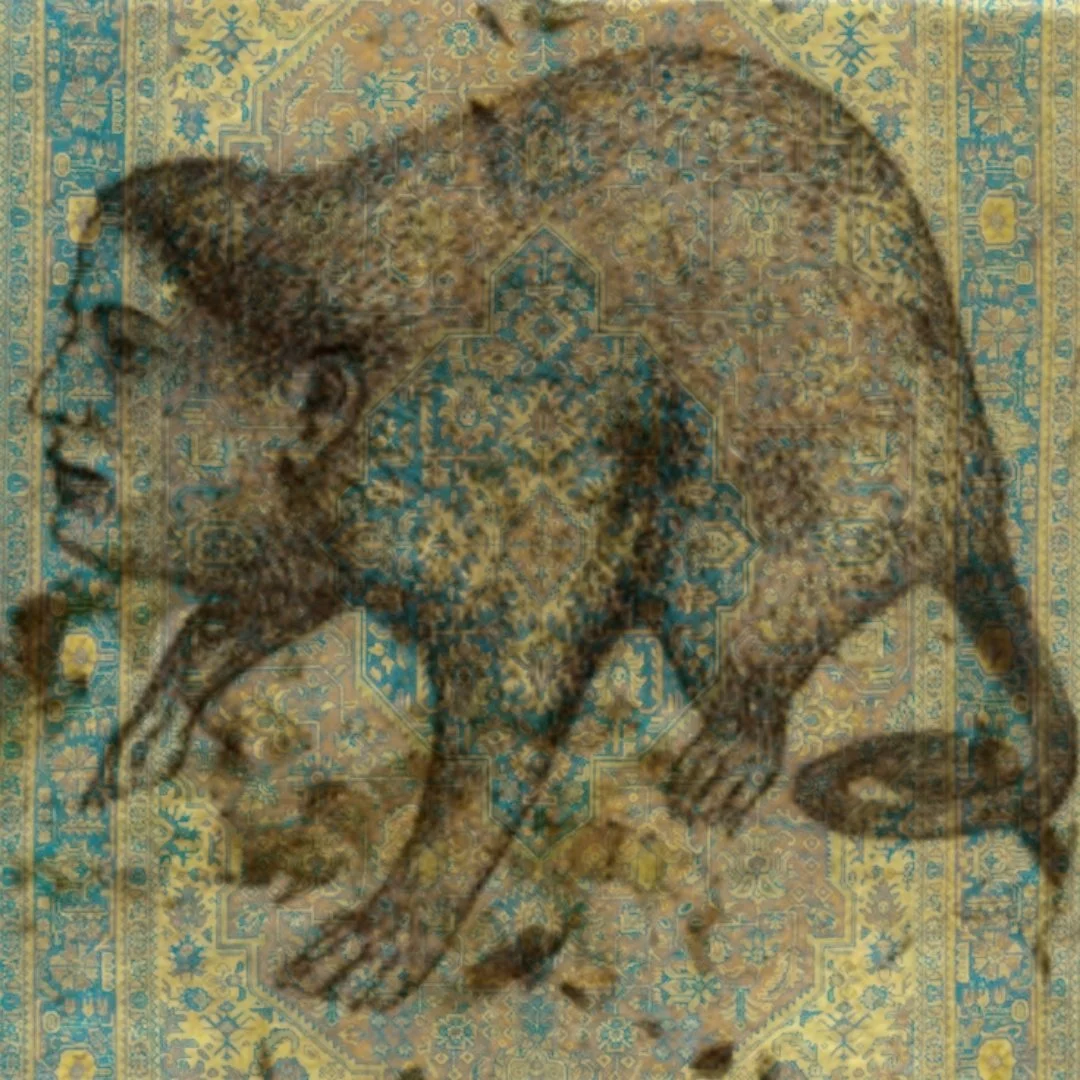
The first thing Isa had noticed about the city was the vermin. Small gray mouse scurrying along the frayed edge of the carpet, then disappearing into an almost imperceptible crack in the wall. If the landlord had seen it too, his face did not give it away. He was standing under the ceiling fan with his hands on his hips, saying nothing, looking at nothing in particular. Mold blossomed in the corners of the ceiling. Perfect, Isa said. I will take the room.
***
Isa had spent the entire night before the move tossing and turning. Trapped and tangled in the sheets, flipping the pillow over to its other, equally warm side, sweating, sweating more, trying to escape, something, somewhere, something somewhere cold. In brief interludes between the tossing and the turning, and sometimes also during the tossing and the turning, she would grow afraid that the stranger on the bottom bunk could feel her movement, the shaking of the bed, of their bed, the bed the stranger had been doomed to share with her. Sweat seeped into the mattress nonetheless.
She could feel that the stranger had begun to harbor in her heart an annoyance with Isa, the feeling small and cold and hard like a pebble. Smoothed by rivers of sweat. Sweat-induced erosion. So, whenever she would feel the movement coming on, she would try to postpone it, to will it away. This, of course, worked rarely and only for short intervals of time. Then the motionlessness became unbearable once again, and Isa flailed helplessly under the plywood ceiling, whose sole purpose seemed to be to absorb as much heat as possible and expel it directly and mercilessly onto her body.
The stranger, a thin and tan middle-aged woman, had only arrived that evening, when Isa was already long under the covers. Still light outside, the quiet but persistent whoosh of the street below, not of cars nor of trees but of the street itself. The room smelled of sunlight and of people. The woman must have spotted Isa from the door already; she moved quietly, quickly, so as not to wake her. Meanwhile, not asleep, Isa watched the top of the woman’s head bobble as she scuttled around the room, sunburnt scalp peeking through her bleach-blonde hair. She watched the woman’s bronze and peeling shoulders rise and fall, the damp patch of sweat on the back of her green athletic top when she bent down to reach into her backpack.
The thin woman went straight to bed, all her clothes still on. That night, in the unbearable heat, this fact made Isa feel all the more sorry for her. She imagined the woman’s long journey from a faraway land, on foot, on trains and on buses but mostly on foot, and straight under the covers of the dusty hostel bunk. Isa wondered if the thin woman felt sorry for her too: sorry that Isa couldn’t help but thrash like a desperate animal, sorry that Isa was the type of person whose suffering made rooms unbearable to be in, made beds unbearable to sleep in. She rubbed her face until it hurt.
***
Isa had spent almost a month in the hostel, in the town, looking for a room in the city. The town was riverless and lakeless, surrounded by farmland from all sides, and farmland of the crops kind rather than the cows kind. It had been built on previously uninhabited wetlands, in the seventies, using huge pumps to drain the shallow water until it revealed swampy soil. The soil was then triumphantly reclaimed by man and immediately peppered in large-scale construction project sites. As a result, it was entirely drab and sterile. Endless suburb, shop-house-house-house-shop. Complete optimization of motion achieved by removing anything remotely interesting between Point A and Point B.
In addition, in the entire draining ordeal, the town had ended up with the short end of the stick: while the other manmade urbanicities on manmade land were all manmade to touch the sea, this one had been placed on the far edge of the former wetlands. Landlocked by design. Though Isa had chosen the town based on nothing more than bed price per night (sort by: lowest), she now thought that this and its other liminal features turned the place into the perfect waiting room. So, she waited. Awoke first, often while it was still dark, fell asleep first, often while it was still light.
During her awake hours, Isa scrolled through housing websites, mindlessly copy-pasting her personal information into strangers’ inboxes. I am a working professional, female, twenty-five years old. I am clean and I am eager. Send. I am young. I am kind. On the days where she received no response, which were most days, she only got out of bed three times a day: once to eat and twice to piss. All the while, people moved in and out of the room, arrived and unpacked and packed and left. They sometimes greeted each other in hushed voices. Isa spoke to nobody, and made no friends. She was busy waiting.
***
At the first sign of rain, the damp mildewed belly of the city would swell and swell until it spewed out a river of mice and rats out of the sewers and into dimly lit alleyways, under bridges, to the bottoms of stairwells. Under the yellow streetlights, their shadows stretched imposingly along walls and across cobblestones: twitchy shapes, blink-and-you’ll-miss-it, flickered by, motion so quick it was almost not motion.
Three weeks into her life in the city, in the city’s museum of film, Isa learned about the phenakistiscope, the zoetrope, and the zoopraxiscope. These were the different contraptions people had developed in what seemed to her a desperation to create the illusion of movement. She even put her eye up to one of these: a strange, slotted cylinder through which, when she spun a lever, pictures became motion pictures. Not-motion so quick it was almost motion.
Back in her room later, Isa couldn’t remember whether the contraption she’d put her eye up to had been the phenakistiscope, the zoetrope, or the zoopraxiscope. She could only recall the text on the placard, stating that its earliest predecessors dated to ancient societies, over five thousand years ago. Upon reading this, she was rather skeptical but refrained from looking it up.
***
Having not slept a wink, Isa snuck down the ladder of her bunk, not to be her bunk for much longer. The bed shook profusely. Curious, mostly embarrassed but also curious, she stole a last glance at the woman in the bed below. The woman seemed to be asleep, though in the past month Isa herself had often seemed to be asleep on account of faking it, lying motionless and facing the wall, sometimes for hours at a time. The woman’s back was turned to her, anyway. On the other side of the room, a man let out a snore, yes, just one, then turned over.
Somewhere below eye level, she could hear a rubbing of the eyes. Then a scratching of an itch. People often talked about sex, anger, drugs: how these things excavated in humans the primal from layers upon layers of civilized life. When Isa thinks about primal, she always thinks of sleep. People close their eyes in bed and let themselves be taken. They rub and scratch and sigh uncontrollably. About how the parts of the brain responsible for arousal, be it sexual or be it upset or be it fear, spark wildly and lay their secrets bare. How people wake up still carrying the scent of the secret. Isa can always smell it on them. Like an animal.
***
As a child, Isa shared a bed with her grandmother, a renowned sleep-talker. Every night, her grandmother would fall asleep first, her heavy chest rising and falling rhythmically, her lips parted slightly. Every other night, as her eyes moved back and forth perceptibly behind her eyelids, she would wail in her sleep through those open lips: not really a cry or a word, just a sound of her throat, or of the dream.
In the morning, Isa would say: You were doing that thing again. Her grandmother would laugh heartily. Do you think old crows like me still remember their dreams? Pah. Silly girl, silly. She would whip Isa up on her lap, run her big hand through her hair. But Isa could smell it on her. The secret hung heavy in the air.
***
When Isa was twenty, she had a boyfriend. They dated on-and-off-but-mostly-on for three years but never lived together: he was thirty-four and possibly divorced, though Isa was never really sure. She thought sometimes he might have a child, a little boy too young to understand the concept of an Isa, or a teenager in front of whom the existence of an Isa in the dad’s life would be an immeasurable embarrassment. She often weighed the plausibility of each option in her mind until the answer made her nauseous.
He lived in a two-bedroom, in the heart of the big city. The walls were bare save for a print of Schiele’s Seated Woman with Bent Knee. The plant was always watered, the bed always made; the linens clean and smelling of no one. All Isa knew about Schiele was that he sometimes painted prostitutes. Who lives in the second bedroom, she asked once. It’s a guest bedroom, he replied, though he didn’t let her see inside.
Most of the time Isa and the boyfriend spent together was in the next town over, in the apartment she shared with three other students. Hey, they’d say to the boyfriend politely, waving from the couch. Then he and Isa would retreat to her bedroom. Though suspecting that on account of being twenty and a student, Isa was the embarrassment in their relationship, she found that she preferred it when they’d arrive at her flat only to find no one else there, or everyone asleep, or the door to the living room shut and all three voices on the other side.
Every night, the boyfriend would fall asleep first, his heavy chest rising and falling rhythmically, his lips open. Though he never spoke in his sleep, he sometimes sighed loudly, as if frustrated by something. He often told her of his dreams; of symbol and thought filtered through some vaguely psychoanalytic lens. She could always smell it on him, the thick musk of pretend. Aside from the relationship itself, this was the only secret she felt they shared.
***
Isa lugged her two suitcases (one for her clothes and the other for the cutlery and bedding) down the steps of the hostel and into the street. At each step, the suitcases, too heavy to carry, thumped down with full, twenty-or-so-kilogram impact. Clattering of cups and clinging of metal boxes and rattling of spoons. Thirty-two steps. Thirty-two clatters, thirty-two clings, and thirty-two rattles. People stirred in their beds. Thirty-two large drops of sweat gliding down Isa’s back and into her underwear.
The street outside the hostel was still illuminated by yellow lamppost light, though the deep blue of the night had already begun to soften. Isa rubbed her eyes, felt a sense of premature nostalgia for the bunk, for the period of imposed inertia, the kind that is unearned and has yet to ripen. She shuddered thinking about the underwear.
***
The mouse always waits for Isa to turn the big light off and stop stirring in bed to make its first move. Until then, it presumably hides in the walls, travels through a labyrinth of pipes and gaps: its secret mouse-tunnel-world connecting sewer systems and houses from entire neighborhoods away. Isa has read online that this mouse is the scout, that its job is to bring food to the rest of its colony, tucked away safely in its nest.
Sometimes, not yet asleep, she sees the scout’s shadow enlarged across the floor by the orange light coming in from the hallway. She imagines the colony, warm in a bed of dust and insulation. And the scout, the scout’s long shadow, exposed and small in the middle of the carpet. Isa closes her eyes, lets herself be taken. The scout doesn’t sleep. It has no secret.