

the world is your oyster
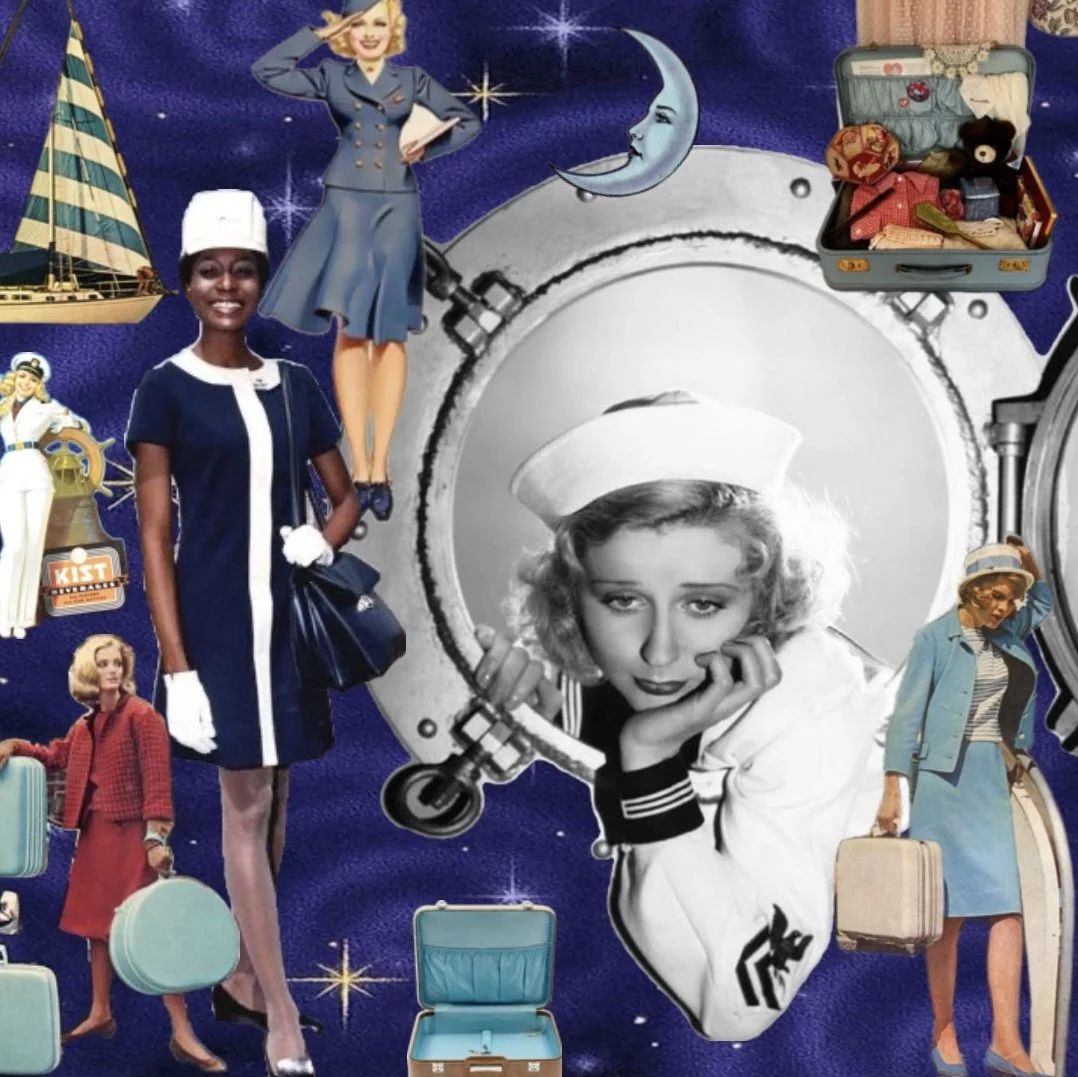
‘‘Being born a woman is my awful tragedy. [...] Yes, my consuming desire to mingle with road crews, sailors and soldiers, bar room regulars--to be a part of a scene, anonymous, listening, recording--all is spoiled by the fact that I am a girl, a female always in danger of assault and battery. My consuming interest in men and their lives is often misconstrued as a desire to seduce them, or as an invitation to intimacy. Yet, God, I want to talk to everybody I can as deeply as I can. I want to be able to sleep in an open field, to travel west, to walk freely at night...”
Sylvia Plath
Me and my friends met some sailors this summer*. They had parked their little rustic sailboat just off the coast of the bar where we met. To reach it, we had to hop on a dinghy so small that our feet were dipped up to the ankles in seawater for the entirety of the trip. Once we arrived, we spent the rest of the night drinking and dancing to the boys’ spanish music in the little leg space we had on the bow.
After we settled down on the makeshift cushions under the sails, it came over me just how special the moment we were living was. I couldn’t believe where we were. I had never been on a sailboat! We listened in awe as the guys drunkenly recounted the adventures they had sailing those summer weeks. I tried to grasp what it would be like for someone to be able to travel the way that they did. They had set off the southern tip of Spain weeks before and landed on the northern coast of Sardinia a few days earlier. They didn’t seem to need anyone or anything besides money for gas and some food. And each other.
We had spent the last ten minutes with our necks up, looking at the stars, when the guy who owned the boat broke the silence. ‘You know, sailing is amazing. But there’s something about being out on the water… it makes you feel like you’re never really safe. Like something could happen to you at any given moment. Even on nights like these’**.
*
I have a memory of being in the car as a kid. My mom is driving. She’s telling me to be careful of people you don’t know, because some bad things happened to her when she was my age. A strange man picked her up from school one day, she says. He told her he was her mom’s friend. When they got in the car and took the highway, he started touching her. She screamed and screamed
And screamed
And screamed
Until he drove her back to town.
When my mom was a little older, she tells me, her parents had some people over for dinner. She went down to the wine cellar and my grandfather’s friend came down with her. He groped her in the dark. Her parents didn’t believe her.
I think I may have been four or five when I first felt what it was like to be stared at. Me and my parents have been going to the same little seaside town since I was born. In my first memory of the place, we are sitting down in a cozy pirate-themed bar. I like it.
There’s a man with dark sunglasses on two tables over and even though I can’t make his eyes out, I know he’s looking at me. I turn towards him anytime I feel his gaze, but he just turns away. I don’t know why he’s doing this but it feels bad. I don’t like it.
I tell my mom I think he’s looking at me. She’s alarmed, but I don’t really understand why. He’s not doing anything, really. We never went back there.
Fast forward a few years. I have enough of my parents. All of my friends are able to go to school by themselves or take the bus or stay in the park until late and I just can’t. It’s like they think I’m going to break as soon as I set foot outside by myself. They treat me like an idiot. It’s not fair.
I moved across Europe. They are more worried than ever.
*
Even through the haze of that night, I began to reflect on what those words meant. As much as I know how vulnerable some men really are, I only seem to come across men who appear to create an almost artificial sense of danger in their lives, or at least enjoy walking on its edge. Women, on the other hand, pursue experiences in spite of danger. These are two very different frameworks of action. Danger is not some abstract force for us to construct and ponder upon. It has names and faces. We don’t need to go out into the natural world to meet it. It is not a possibility, but rather a given that we will encounter it. It is not something on the outline of our experiences: it defines them. We are not surrounded by ocean waters but already in them, barely staying afloat.
Danger in this sense is a deep-rooted gendered feeling of fear that exists conjoined and parallel to our every action. Concepts such as chance, misfortune or agency – the extent to which we can exert control over our lives – take on a new meaning for women. So does the idea of common sense. Common sense is this magic wand that we are expected to wave in the face of the ever-present risk that is going through life as a woman. Not making use of common sense means putting yourself in ‘undesirable’ situations (which for men are just situations, full stop). If you travel alone in the ‘wrong’ side of the world; of the country; of the city; if you step one foot in the realm of ‘things you better not do’... you can’t blame anyone but yourself.
There are countless issues with this rhetoric, of course. No side of the world is really right for a woman. You can get raped in rural Central Africa the same way you can get raped in suburban Northern Europe. What women share among each other, before any other identifiers such as class, race or religion, is the knowledge that there are things that can happen to you for no other reason other than the fact that you are a woman. One of us being abused implies that all women can be abused, regardless of how different we might like to think ourselves. And this is the awful tragedy of being a woman: that you can never escape this possibility. Even if you do come out unscathed, by taking every precaution you could’ve possibly taken – not using public transport at night, leading a sober lifestyle, not travelling where you don’t know your way around, never relying on strangers, never being unprepared, never being too friendly or not friendly enough to the wrong man, dressing modestly, not attracting attention online and in real life – chances are you’ll come to mourn what you have missed out on. You’ll miss the music they play in disgusting bars at 2 AM. You’ll miss travelling to places you never thought that you would find yourself in. You’ll probably miss hitchhiking. You’ll definitely miss walking at night, or all of the people that you can only meet when you do things you’re not supposed to do. More than all, you’ll envy not carrying suspicion with you everywhere you go. Realistically speaking – and with no intent to minimize the hardships that some men really do go through – what equal tragedy can men claim as theirs? What common denominator do men share, so that they can say: this big, bad thing only really ever happens to us as men, not white, black, poor, rich, young, old, christian, muslim – just men.
The way in which men brave different types of danger – be it the natural world, or other men – also operates in a semantic universe of its own, by which their bravery comes to define them and their purpose. Men who are not afraid are eager for life, heroes, protectors, pioneers, their identity shaped by their victory. Women who are not afraid are reckless idiots who are looking for it. What reward do we get for facing our number one predator in every instance of our lives, down to – and most specifically in – our most intimate moments? What do we have to show for it, other than the shallow relief of knowing that it happened to her, not me?
I don’t need to imagine being alone at sea. I don’t need to feel that there is this thing, too big for me to comprehend, that could suddenly turn against me. I don’t need to visualize powerlessness to understand danger. I don’t need to imagine waves, ebbs and flows, or the quiet uneasiness that comes with the calm, dead sea. I’m all too familiar with whims and impulses. And I’m not talking about mine.
*
I am sitting down at a bar, trying to concentrate on writing the final words to this article. Two men just sat down at the table beside me. As one goes inside to order two pints – it’s eleven in the morning – the other slides closer to me so swiftly it’s almost like he jumped down the bench we’re both sitting on. I brace myself. What are you writing about? I turn towards him. How men and women perceive danger differently. And how it affects their lives. His eyes are sparkling, but not from curiosity. He rather looks as if I just offered him a challenge. He nods emphatically, smirking. There’s silence for a bit as I try to find the train of thought I just lost. You know… (here we go) as a man, I walk around in a constant state of readiness. I know that any other man I encounter on the street could launch into attack at any second. Men are always ready to fight other men, to protect those around us. Always.
That’s it. This is what I mean, I think. I find it scarier to think that men might be aware of the volatility of each other’s outbursts, compared to the idea that they might just be too wrapped up in their own worldview to know the danger they pose to women. But really, they know; they might have even felt on their skin. It’s the difference between going through life looking for the moment that’s going to make you a hero versus trying not to become prey.
I ask myself whether to respond to him or let the silence fall again. That means that as a man, you feel that you have agency over the world around you. That you can protect yourself if you really need to, I say. Women don’t have that. Or at least it doesn’t feel like it.
I’m afraid that he’s going to contradict me, but he just smiles and sips on his beer. Very astute, he says. The conversation ends there. I’m done writing.
* Sailors is code for Rich Guys with a Boat.
** He was too stoned to be this eloquent. This is my rendition of his words.