

Yes babe, you’re so niche
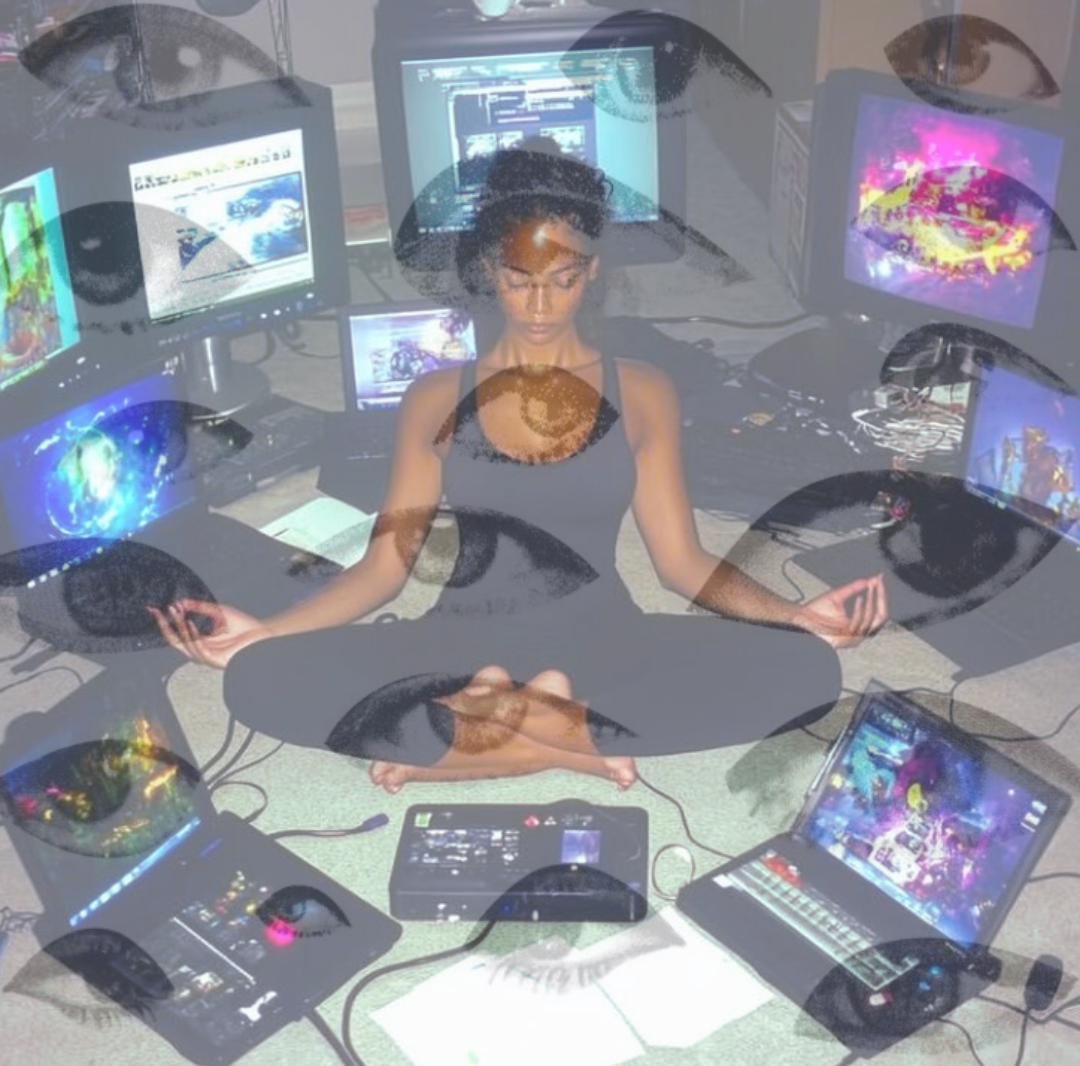
This past summer, I deleted almost 400 followers from my Instagram follower list. A digital cleanout in the does it spark joy? style that I had been long procrastinating by then, as I, for some reason, felt that it was going to be a heavy riddance to part with. After all, I have had this very Instagram account ever since the age of eleven. Its following list has archived hoards of classmates, summer camp friends, and estranged acquaintances over the decade that it has spent with me. It held people that I didn’t speak to anymore, old flames, dead accounts and even a couple of my high school teachers. Even so, it accounted for surprisingly little information about me compared to what I knew about other people on my feed.
See, I never really posted online. I wanted to, but I felt the looming threat of being labeled ‘cringe’– of being the person whose posts or stories could be shared in private group chats and made fun of. And when I did, it was always such a rush. I’d spend hours rewatching and picking apart my latest story or post, wondering how I would view it if I were someone else, if I were someone… cool. Or, well, cool-er, at the very least. The idea of not being cool, of not being the person who knew and understood enough about what was trending in the world to be able to efficiently emulate it, eventually paralysed me into anonymity. I posted less and less until in 2020, after months of being housebound and force-fed the content of those whose social life had been apparently unaffected by the global pandemic, I decided to forego Instagram altogether. I figured that not only I wasn't interested in what other people posted anymore, but also that I didn’t care to post myself. Once and for all, I just accepted that I simply wasn't ‘good’ at social media– I wasn't good at taking pictures of myself, I wasn't good at choosing the right angle, I wasn't good at photo prompts or funny captions and, most importantly, I wasn't good at hitting the balance between caring about what people wanted to see and not caring about how they were going to receive whatever I ended up giving them. Real life, I decided, was vulnerable enough. I didn’t need the digital exhibitionism.
I spent two years in complete social media anonymity, and, deep inside, I knew I took pride in being the only one out of my friend group who, in a sense, was too good to be on Instagram. I, evidently, had much more important things to do than stalk other people’s inconsequential online musings, just the same as I, obviously, did not need the shallow validation that came from views, likes, comments or any other form of engagement metrics. Right?
I broke my digital celibacy after my move to Amsterdam as I realized that Instagram could, in fact, help me get in contact with the people I met. And, you know, make friends. Which it did. It was only a matter of a few months until I started posting on my stories again, high on the newfound confidence that only your first year at a liberal university can grant you. I didn’t post often, but just enough so that people watching would know that I was alive, and cooler than ever. I'd share concerts I went to, songs I listened to, candid shots of my friends and I to make it clear I did, as a matter of fact, have a social life, pictures of cats and dogs and of my new, beautiful, Instagrammable city. Posting pictures of myself, however, still felt out of reach. And even what did manage to make the cut onto my stories, had really been curated ad nauseam. What track goes with what angle of this anonymous canal view? Is this outfit giving trendsetter or is it giving ‘I got dressed in the dark’? Am I still in danger of being labeled cringe? Will my taste be questioned? And so on.
In short, it didn't feel like it was my account, or like it had ever been. Every post felt like I was performing in front of an invisible audience. Who was watching my stories, really? Anonymous users. Creepy men I didn't know in real life and creepy men I did. Old classmates I never liked and that never liked me. Mutuals I added when I was twelve and never spoke to again. Strangers. People I didn't actually know or talked to. Why did we follow each other? Why was I watching their content, why did I know things about their life, a life I never touched in a significant way, if ever? It all started to feel a bit silly, like I had been forcing myself to grow my follower count for its own sake, or like I never evolved beyond middle-school popularity contests. It also felt like maybe –just maybe– the reason why I never resonated with the idea of sharing pieces of myself online was precisely because I didn't know or care about who I was sharing myself with. If I really had to question every ounce of vulnerability I put out on the internet, wouldn't I at least choose my audience ?
400 mutuals and one-sided followers were thus forcibly kicked off my account. Did it make me feel better? Yes, actually. It began to feel more like my profile than ever. Did I actually start posting as much as I thought that I would, reaching the status of niche avantgarde internet celebrity? No. I post just as little. Why did I really do it, then?
I kept turning over the idea of coolness in my mind. Some of the coolest people I know have less than 200 followers online and a vibrant social circle in real life. In this sense, they defy the presumed symmetry between internet persona and offline social network. There is an expected cultural capital that accompanies a high follower count, a silent assumption that the more people are willing to regularly consume your content, then the more attention people will actually pay you in real life. It could mean that you have more friends, are more attractive, date more, or are a generally interesting and entertaining person. That’s a lot of assumptions, if you ask me.
Why was it that I, all of a sudden, was willing to ditch my ten-year long Sisyphus uphill struggle towards a never-ending follower count, risking the possibility of being labeled uncool by anyone who came across my profile?* Clearly, something about my definition of coolness had changed.
✴
I am not the only one to question how the digital landscape of today may have transformed people’s approach to online personalization. The New Yorker writer Kyle Chayka, in a piece from last November, argues that posting has become infinitely more competitive as users find themselves rivaling AI-generated content, influencers, curated ads and people using social media to post for a living: ‘personal social-media accounts now serve as promotional spaces for podcasts, subscription newsletters, Depop pages, cryptocurrency pyramid schemes, and shopping referral links.’ It is disorienting, after all, to view a friend’s story of their birthday party in the same feed as a celebrity’s professional photography shoot, and expect to engage with them in the same way. If we think back to the early days of social media, specifically in the case of Instagram and, if you’re old enough to remember it, Facebook, the amount of attention you could receive on your posts or status updates was valuable, because it directly reflected the people in your circle. But the purpose and scope of these websites has changed, and so has the kind of attention that circulates within them. Bots, fake accounts, unidentified users and the follow 4 follow logic: the kind of traction that someone’s digital persona is able to garner has long stopped meaning something about that person’s leverage of real-life status metrics such as looks, popularity, social life or charisma. Even within the attention economy, where eyeballs are a currency, attention may have started to lose its edge.
It is also true that being on social media has long stopped being pleasurable, fun, or distracting in a real sense. Rather than provide innocent solace and escape from mundane bores, Instagram and other types of social media have morphed into anxiety-inducing rollercoaster loops of AI slop, ragebait accounts, hate profiles, dead usernames, information silos extravaganza, Temu ads, and just about the worst political and humanitarian news you never thought could hit your feed– by the hour, no, the minute. It makes sense, then, that more and more people would decide to hang the digital hat and embrace a much-needed digital detox– follower count be damned.
But beyond people’s hesitation to participate in the Russian roulette that is algorithmic logic, I believe there is a deeper cultural drift at play here. Some of the biggest lifestyle shifts of the last few years have centered the philosophy of ‘less is more’, simplifying overwhelming self-care rituals, eating habits, and consumption routines into their cleaner, more manageable (and possibly more ethical) counterparts. Veganism, minimalist home decor, capsule wardrobes, no-makeup makeup, as well as the recent, much talked about ‘analogue’ craze: people feel an increased need to curate various aspects of their lives in a way that grants them agency over what and how much they consume. Opulence, greed, and unquestioned indulgence are not enviable tendencies, because they denote a naive embrace of excess in the era of capitalist overconsumption.
There is a newfound cultural power in being the kind of person who can sift through the digital noise and come out with something concrete. A cohesive identity, look or overall ‘aesthetic’ (both offline and in real-life), as well as someone’s ability to stick to it, has morphed into a sort of currency, a signifier of superior taste in the age of slop. Participating in the latest micro-fad is not cool anymore, because real trends have ceased to exist as we know them. We barely even have a fashion style to represent this decade– everything is a reworking of some past look, but modernized, and available on TikTok shops. Young people cannot look to music, cinema, celebrities or fashion for cultural guidance because they will only find messy references to something else. As there is no real Gen Z identity, people feel the need to curate their taste, looks, and even connections, as a means to assert their individuality. No one wants to think that they may be a trend follower, but everybody wants to be complimented on their hyper-niche Spotify wrapped, obscure hobby, Letterboxd diary, secondhand find, Substack thought of the day, or curated photo-dump. Thus, a new cultural role is born: the editor, the curator, the archivist. The real status symbol of today is being able to flaunt not only a curated outward appearance, but a curated existence, too. From looks and interests to social circle and for you page: if the new trademark of a ‘cool’ person is curation, wouldn’t it make sense for people looking for social approval to, in some backwards way, refuse it by having less followers than ever before? To curate not only who are what they look at, but who and what looks at them?
✴
I’m not sure if this recent cleanout of mine is the thing that will make me cool once and for all, but I admit I never did resonate with the craze to have a big online following. I have always been above it –or below it, depending on how you look at it– and, beyond my obvious attempt at non-chalance, it feels nice not to pretend that I care anymore. Still, I’m aware of the irony. A truly cool person won’t ever give a fuck about how many followers they have. Or don’t have. I guess there goes my answer.
How I felt writing this article… Rawr
* This reminds me of the time that, a few months ago, a guy who I gave my Instagram to in a bar took one look at my profile and went: damn… you need to get your follower count UP!!! …
He just doesn’t get it.