

Consume, so We Can Be Together
I’m not embarrassed about it anymore, but over one year ago, my roommate picked up a small bottle of Albert Heijn brand cola from the countertop and asked: “Wow, what person couldn’t even afford a bottle of real cola?” Me. I was that person who couldn’t “afford” it. And the shame crept up almost instantly, flooding my cheeks and leaving me speechless.
Truth is, I didn’t really drink cola. I didn’t even really like it, and I most certainly could afford the brand name of a 0.5L bottle of soda. But I had bought it in a pinch for my friend and I to experiment with some mixed drinks- so who cares about the brand name? Better to get cheap than waste money for something you’re unsure about. That comment still stung, though.
Do our purchases say anything about us? Maybe. Some things, certainly. But most times, they don’t reflect who we truly are, what our interests are, what we care about, how we treat others. Usually, they reflect our preferences and that’s about it. When you’re past high school age, outside of a materialistic culture and not rich enough to be a snob, nobody cares about brands anymore. Some people might even find them gaudy - bless them! Yet somehow, our shopping habits still worm their way into our personal image, whether we want them to or not. Even worse, they’ve taken over our daily lives and sometimes, relationships with others.
What is there to do when you’re bored? Shop around for this or that small thing you’ve kind of been wanting but kind of not. Spend some money on a to-go drink and start browsing. You want to have a craft night with your friends? You need to go shopping first and peruse entire aisles of craft supplies until you’re convinced you could become an expert clay figurine maker if you just have all of the necessary tools with their hefty price tag. You want to spend time with a classmate at a nice café in the centre? All is well, but then you get up and you don’t know where to go, but there it is! The shopping street! You could go browse together- hopefully you’ll find out something about them too. Or are you organizing a formal dinner for your class, and you need a fancy-ish dress? Well, you could wear the one you thrifted 3 years ago (that is in perfect condition, easy to accessorize and gorgeous, gorgeous, gorgeous), but when you put it on, you’re feeling a bit weird. Nobody in this circle has ever seen you wear it, yet the shame is there. Why?
Compared to all the adrenaline and enthusiasm of shopping, abstaining from it- also called being a smart person who doesn’t spend money recklessly- offers nothing to the mind. There’s only a dull recognition of the fact that you stopped yourself from cluttering your room and emptying your wallet- so what? That’s boring! You convince yourself you’re a bore who doesn’t know how to “treat themselves” once in a while, who’s no fun telling their friend that hey, that top you picked out is nice, but it’s falling apart at the seams and it inexplicably costs 50 euros, so maybe you shouldn’t get it. There’s guilt hidden in there, inhibiting you from letting loose and satisfying your shallow desires in the name of fun times with loved ones, or even girlhood.
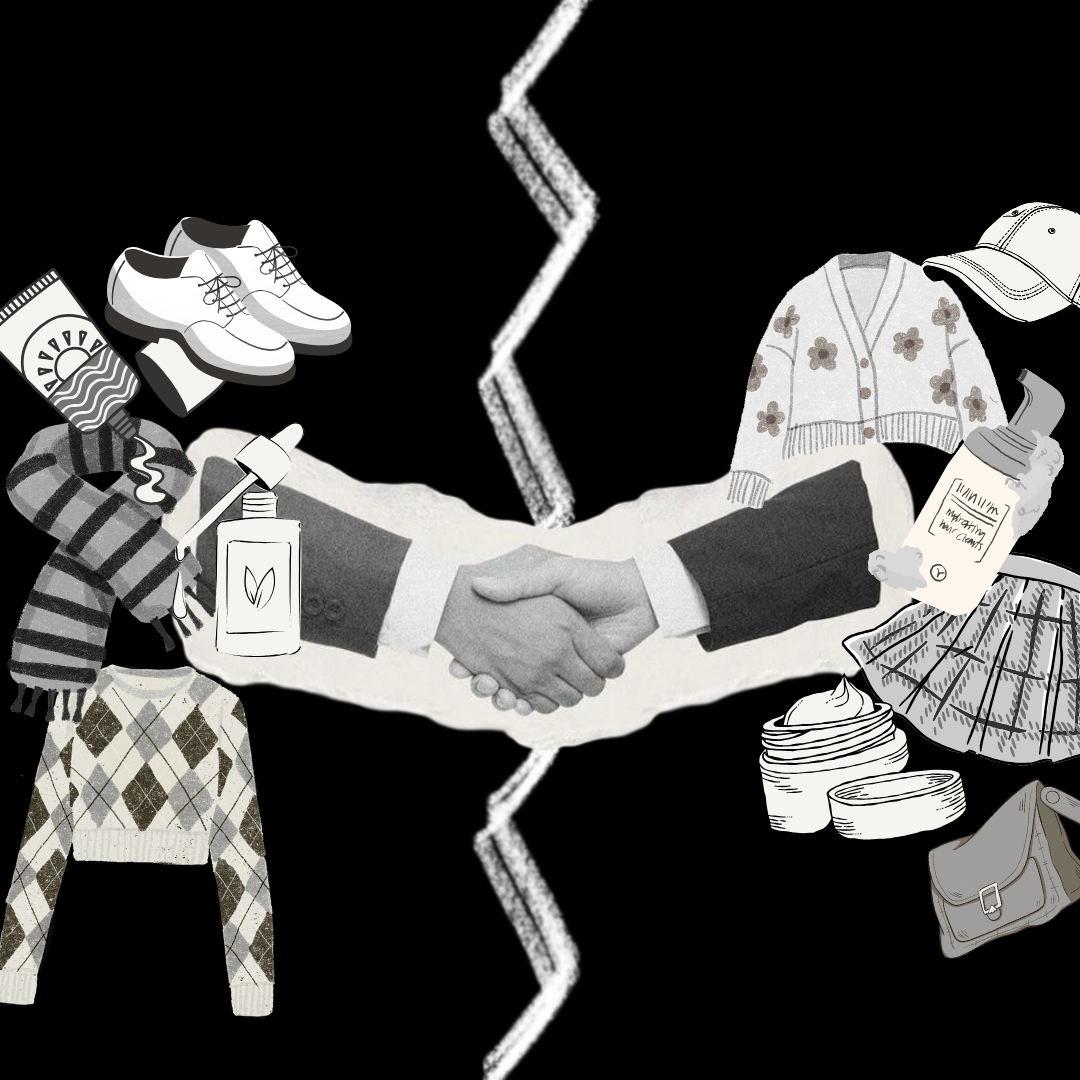
Amongst the long list of possible bonding activities, shopping together easily rises to the top due to its inherent neutrality. Looking at products, comparing and trying them doesn’t require much personal involvement or passionate arguing. It’s a somewhat rational process sporadically marked by personal preference, both of which are generally uncontroversial. When disagreement appears, it can be easily swept under the category of different tastes and individual style, swiftly avoiding any arguments that could crack the relationship. Shopping is light-hearted and fun, uncomplicated by differing standpoints, reasoning and lifestyles, which begs the question: can it truly be a consistent basis for a genuine relationship? The obvious answer would be no, followed by a mention that most people don’t just go shopping together. Yet product consumption easily sneaks its way into a lot of conversations, filling any pauses or lack of inspiration with passionate, yet surface level descriptions of new purchases. The only emotions present in such conversations are positivity and excitement, which can take up the entire space some people do not want to fill with honesty or personal sorrow. Consumption is thus a safe activity- no matter how you are feeling or what you are going through, you still have to choose and buy things, even if only groceries.
Yet sometimes, not even shopping is a neutral conduit for relationships, and a significant shift happens when politics, personal limitations or financial resources get in the way of having a good time browsing with a companion. Looking for a new lip gloss can be tricky when the vast majority of companies are owned by huge conglomerates, not cruelty free or on the BDS list. Being vegan or having an allergy when picking out snacks from a small range of products can dampen the excitement of hanging out through shopping. And the most obvious of them all, financial differences between people may very well divide them more when picking out a store to get a dress from. By highlighting the unique beliefs and obstacles of an individual, such differences break the carefree neutrality that is expected of shopping. Ironically, it may even alienate a person further - in a sense, they are responsible for breaking the conventions of consumption (which dictate little reflection upon its broader consequences or implications) and eliminating it as a safe way of building relationships. They make the process more “difficult” by turning away from personal preference and towards assertions of a complex worldview, which can be unwelcome when trying to form loose bonds with multiple people around you.
Between a personal frustration and a genuine critique of (over)consumption, the replacement of bonding activities with shopping is truly not the worst change to human relationships that has appeared in the last couple of decades, but it’s still significant. In a restless and conflicting global environment that permeates everyday experience because of information networks and digital activity, it is understandable to not want to complicate personal life further by always diving deep into any potential relation you want to form. Even the closest relationships need their light-hearted moments, and shopping provides that comfort. Sometimes, though, it is painfully obvious how consumption is used as a crutch to avoid discomfort or simply a lack of connection with somebody. The hollowness of it hits me from time to time, and it doesn’t exactly make me sad, but rather disappointed. It’s disappointing to see the pedestal we put purchases on when it comes to “revealing” the true personality of somebody. Ultimately, it’s difficult to police the means through which people form intimate relationships. Once again, it all comes down to that one thing all shoppers know all too well: personal preference.